

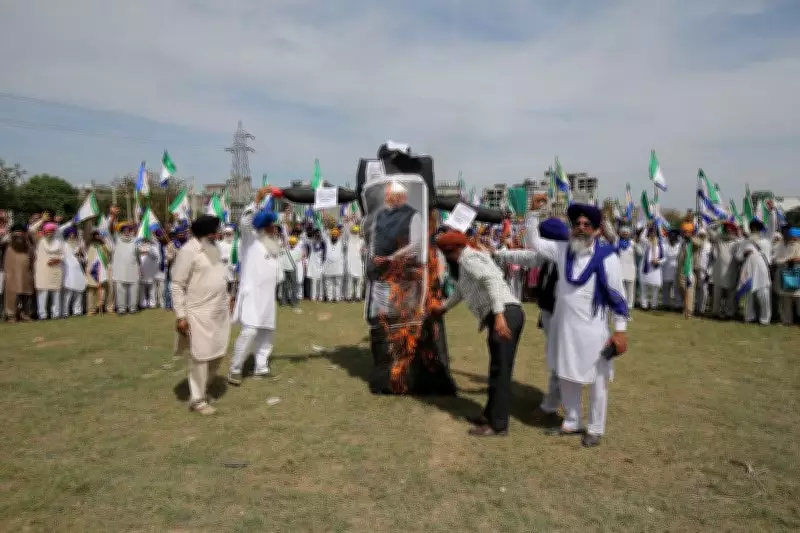
Farmers and Workers Stage Widespread Protests in Punjab, Target Amit Shah
In a significant display of dissent, members of the Kisan Mazdoor Morcha (KMM) orchestrated coordinated protests across Punjab on Saturday, culminating in the burning of effigies of Union Home Minister Amit Shah. The demonstrations, which spanned 33 locations in 19 districts, were timed to coincide with Shah's visit to Moga for a political rally, underscoring the deep-seated anger over what protesters label as "anti-farmer and anti-worker policies" by the government.
Symbolic Acts of Defiance Across the State
According to KMM leaders, the protests involved marches and symbolic funeral processions before large effigies of the Home Minister were set ablaze. In Amritsar, a substantial gathering assembled near the old Commissioner of Police office and proceeded to the Dasehra ground in Ranjit Avenue, where an effigy was burned amidst chants and resolutions. Morcha leader Sarwan Singh Pandher highlighted that the protesters passed resolutions demanding the opening of the India-Pakistan trade corridor and the release of prisoners, including Sikh detainees who have completed their sentences.
Key Demands and Criticisms Voiced
Addressing crowds at the Dasehra ground, union leaders sharply criticized the Bharatiya Janata Party government for organizing a "Badlaav Rally" in Moga while allegedly neglecting the pressing concerns of farmers and laborers. They expressed strong opposition to several legislative measures, including:

- The proposed Electricity Amendment Bill 2025
- The Seed Bill
- The implementation of the Labour Codes of India
Speakers argued that these policies would detrimentally impact farmers, small traders, and workers, exacerbating the ongoing agrarian crisis. They also raised alarms about the potential adverse effects of a proposed India-US trade agreement on Punjab's agriculture and dairy sectors, which are vital to the state's economy.
Core Demands for Economic Relief
The protesters put forth a series of demands aimed at alleviating economic hardships, including:
- A legal guarantee for Minimum Support Price (MSP) to ensure fair crop pricing
- Restoration of employment opportunities under the Mahatma Gandhi National Rural Employment Guarantee Act (MGNREGA)
- A comprehensive loan waiver for farmers and agricultural laborers to address mounting debts
Leaders accused the Central Government of failing to fulfill promises, such as doubling farmers' income and enacting MSP legislation, claiming that rising input costs are deepening the agrarian crisis and pushing many into financial distress.
The protests reflect growing unrest in rural Punjab, with farmers and workers uniting to voice their grievances against policies they believe threaten their livelihoods and economic stability.






