Karnataka Elephants Emerge as Vital Security Force at Bihar's Sole Tiger Habitat
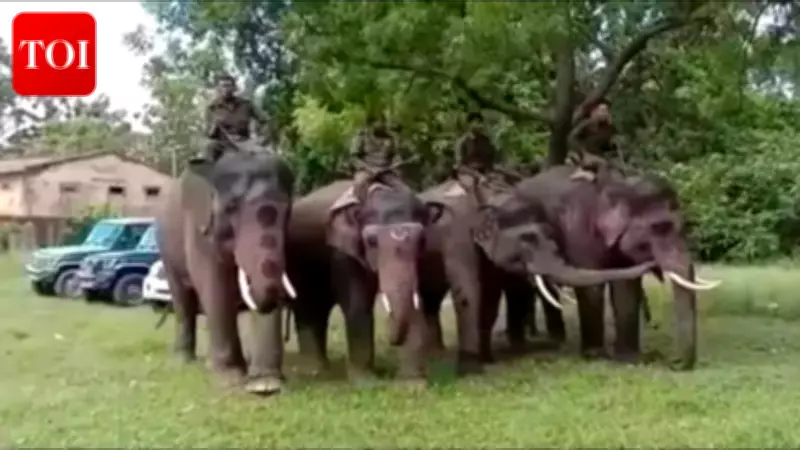
In a remarkable conservation success story, five trained elephants brought from Karnataka in 2018 have evolved into a critical security asset for the Valmiki Tiger Reserve (VTR), Bihar's only tiger habitat. Spanning nearly 988 square kilometers along the borders of Uttar Pradesh and Nepal, the reserve presents formidable challenges for wildlife protection due to its dense forests and difficult terrain.
Strategic Deployment Enhances Surveillance in Inaccessible Areas
The elephants—named Raja, Manikantha, Bala Ji, Dron, and Roopa—were introduced as part of a strategic initiative to improve surveillance in remote and inaccessible forest regions. Their deployment has dramatically enhanced patrolling capabilities in both core and border areas, particularly during the monsoon season when heavy rainfall causes waterlogging and soil erosion, rendering forest tracks impassable for motor vehicles.
"In such conditions, these trained elephants help reach remote areas and ensure the safety of wildlife and valuable forest resources," explained Gaurav Ojha, conservator of forests and field director of VTR. He emphasized that the reserve's proximity to an international border makes it a high-priority zone for preventing poaching and timber smuggling activities.

Ojha further noted that "mounted on elephants, forest guards gain a height advantage and also benefit from the animals' acute sensory abilities to detect suspicious movements from a distance." This combination of elevated vantage points and the elephants' natural instincts has proven invaluable for early threat detection.
Overcoming Language and Dietary Challenges
The transition from Karnataka's Nilgiris region to Bihar's Terai landscape presented significant adaptation hurdles for the elephants. According to Abhishek, an elephant expert specializing in human-elephant conflict mitigation across the Terai Arc Landscape, "they understood only Kannada commands when they arrived." To address this, four mahouts from Karnataka remained at the reserve for nearly three years to facilitate the elephants' acclimatization.
Over time, the elephants were successfully retrained to respond to Hindi commands, enabling seamless coordination with local staff. Their diet also underwent substantial modification to suit the local climate. "The Karnataka-style feed of paddy and salt was replaced with a 40kg daily diet comprising straw, maize, wheat bran, and locally available sugarcane," Abhishek detailed, highlighting the comprehensive adaptation process.
Future Plans for Enhanced Conservation Efforts
The forest department is now planning to introduce four additional trained Kumki elephants to further strengthen conservation initiatives. These elephants are expected to play multiple crucial roles:
- Mitigating human-elephant conflict (HEC) through specialized intervention techniques
- Supporting wildlife rescue operations in challenging terrain
- Enhancing monsoon patrolling capabilities when conventional vehicles cannot operate
Abhishek revealed that "with plans to introduce rhinoceroses in the Reserve, these Kumki elephants are expected to play a crucial role in preventing human-wildlife conflict (HWC) and enhancing monsoon patrolling." This forward-looking approach demonstrates how traditional elephant-based methods are being integrated with modern conservation strategies to create a more robust protection framework.
The successful integration of these Karnataka elephants into Bihar's conservation landscape represents a model of inter-state cooperation and adaptive wildlife management. Their transformation from regional transplants to essential security pillars underscores the importance of patient, tailored approaches in wildlife conservation, particularly in ecologically sensitive border regions where multiple challenges converge.