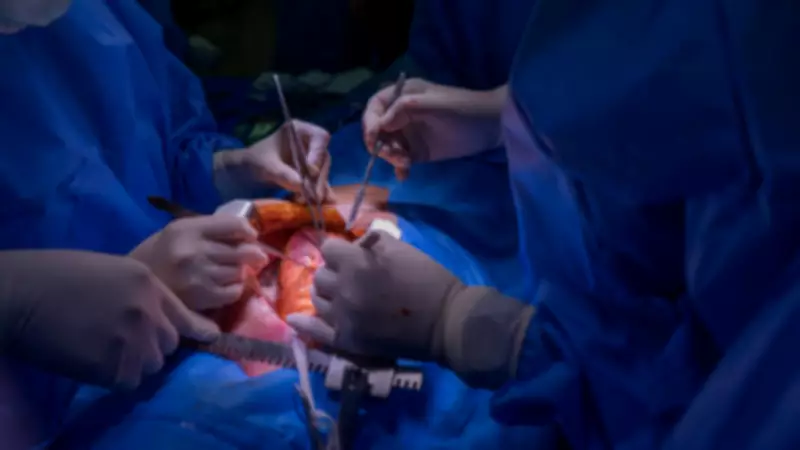
There are moments in medicine that split history into before and after. The discovery of penicillin. The first successful polio vaccine. And then there is 3 December 1967, when a South African surgeon named Christiaan Barnard stood in Groote Schuur Hospital in Cape Town and did something no surgeon had ever done to a living human being: he replaced a dying heart with someone else's.
The Man Before the Moment
Christiaan Neethling Barnard was born in 1922 in Beaufort West, a small town in the Karoo desert of South Africa. His father was a minister in the Dutch Reformed Church, and the family was modest by any measure. But Barnard was sharp, driven, and quietly obsessed with medicine from an early age. He studied medicine at the University of Cape Town, qualified as a doctor, and eventually made his way to the University of Minnesota in the United States, where he trained in cardiac surgery under the legendary Dr. Walt Lillehei.
By the early 1960s, he was operating at Groote Schuur Hospital, building one of the most capable cardiac surgery teams on the continent. He was meticulous, demanding, and not especially easy to work with. But in the operating theatre, by all accounts, he was extraordinary.

The Patient, the Donor, and the Decision
The recipient was Louis Washkansky, a 54-year-old grocer with severe heart disease. His heart was failing beyond any conventional treatment. When Barnard explained what he was proposing, Washkansky agreed without much hesitation. 'I'll take that chance,' he reportedly said.
The donor was Denise Darvall, a 25-year-old woman who had been struck by a car outside a bakery in Cape Town on 2 December 1967 and sustained catastrophic brain injuries. With her father's consent, her heart was made available.
The operation began just after midnight. Barnard led a team and the procedure involved stopping Washkansky's heart, connecting him to a heart-lung bypass machine, removing the diseased organ, and suturing Denise Darvall's heart into its place. When the clamps were released and warm blood flowed into the new heart, it fibrillated briefly. Then, with a small electric shock, it began to beat on its own.
Barnard was 45 years old. He had just performed the first successful human-to-human heart transplant in history.
Aftermath and Legacy
Louis Washkansky survived the surgery. He was conscious, talking, and by most measures doing remarkably well in the days that followed. Washkansky died 18 days after the operation, not from heart failure, but from double pneumonia. The immunosuppressant drugs he needed to prevent his body from rejecting the donor heart had left his immune system too weak to fight infection. It was a brutal reminder that the surgery, remarkable as it was, was just one part of a far more complex medical challenge.
Barnard went on to perform a second transplant in January 1968. That patient, Philip Blaiberg, lived for 594 days. Christiaan Barnard died in 2001 of a severe asthmatic attack while on holiday in Cyprus. He was 78. By then, heart transplantation had become an established procedure performed thousands of times each year across the world, with survival rates that Barnard's early patients could never have hoped for.