

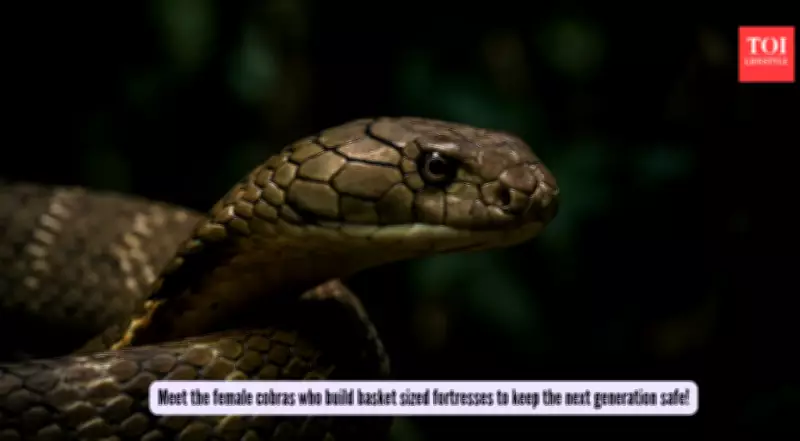
King Cobra's Maternal Marvel: Female Builds Fortress Nests in Western Ghats
While snakes often evoke fear and are portrayed as sinister creatures in folklore, a closer examination reveals astonishing behaviors that challenge these stereotypes. Among these remarkable displays is the nurturing side of female king cobras, who transform into skilled builders in the wild. This phenomenon, reminiscent of tales from the jungle, highlights a unique aspect of snake biology that few people witness.
The Architectural Instinct of Female King Cobras
Female king cobras stand out as the only snakes known to construct nests, a behavior that underscores their maternal dedication. As reported by BBC Wildlife, these venomous giants, which can stretch up to 5 meters in length, exhibit a soft side when it comes to protecting their offspring. Starting in April's dry heat in South India's Western Ghats, they prepare for the impending May rains by building fortress-like nests.
This process is not merely instinctual but involves strategic planning. The female cobra selects sites with excellent drainage, often situated under large trees or bamboo clumps. These locations provide natural shields against floods and predators, ensuring the nest remains warm and moist—ideal conditions for egg incubation. In the humid forests of the Ghats, such protected nests are crucial for surviving heavy downpours.

Step-by-Step Construction of the Nest
Romulus Whitaker from BBC Wildlife details the meticulous construction process. The female cobra begins by sweeping leaves with her body, then coils tightly to carry and pile them high. This labor-intensive task drains significant energy, but the effort is worthwhile. Once the leaves are stacked, she repeatedly crawls over the pile, compacting it into a waterproof dome.
Next, she burrows to create a cup-shaped hollow inside the dome, where she deposits her clutch of 15 to 50 leathery eggs. The finished nest measures up to 1.5 meters wide and 55 centimeters high, resembling a basket-sized fortress designed to safeguard the next generation. This architectural masterpiece blends seamlessly into the leaf litter, acting as nature's camouflage.
Guardian of the Clutch: Maternal Devotion
The mother cobra remains with the nest throughout the 75 to 100-day incubation period, demonstrating unwavering commitment. Her body heat and constant presence deter predators such as mongooses and wild pigs. During this time, she rarely eats and may shiver to maintain warmth, a testament to her dedication.
This fierce protection boosts egg survival rates to an impressive 80%, a level of parental care unmatched by other snake species. Whitaker notes that the mother uses hisses and her expanded hood to ward off threats, embodying a form of fierce love coiled around new life in humid environments.
Nest Specifications and Legacy
Completed nests typically measure around 140 centimeters wide at the base and 55 centimeters high at the center, forming a cozy chamber large enough to accommodate the mother's bulk and withstand monsoon rains. Once the eggs hatch into miniature cobras ready to slither free, the mother departs, her mission accomplished.
These mound-like fortresses not only protect the offspring but also contribute to the ecosystem by blending into the forest floor. This behavior highlights the intricate balance of nature and the often-overlooked wonders of wildlife in India's Western Ghats.






