In a groundbreaking discovery that is reshaping our understanding of ancient human societies, archaeologists have unearthed evidence of the world's oldest known intentional cremation in Malawi. The find, dating back an astonishing 9,500 years, pushes back the timeline for complex funeral practices by several millennia and offers a rare window into the ritual life of early African hunter-gatherers.
A Discovery Hidden in Plain Sight
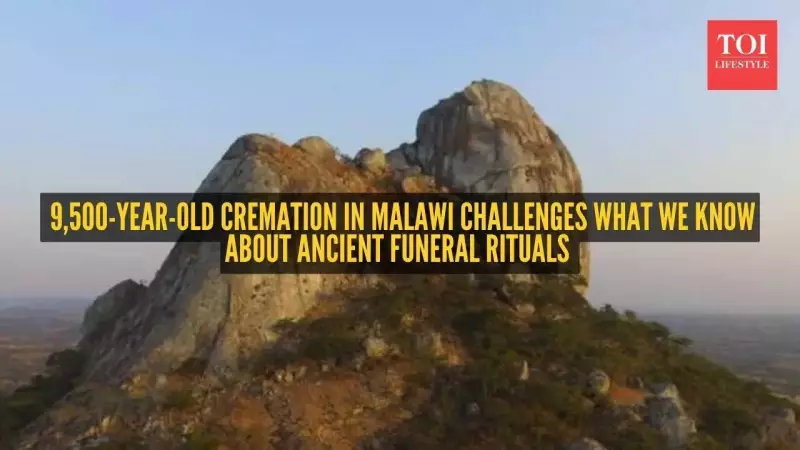
The remarkable find was made at the Hora 1 archaeological site, located at the base of a towering granite hill in Malawi. While researchers have known about this site for decades, the specific evidence of cremation had remained unnoticed. The team uncovered a prehistoric ash deposit, roughly the size of a large bed, containing the fragmented remains of a woman who stood just under five feet tall.
Archaeologist Jessica Thompson from Yale University described the preservation as fortunate. The site's rock shelter protected it from direct rain, and over time, the ash hardened due to soil moisture. This cementation, as Dr. Thompson explained, created a barrier that even termites could not penetrate, preserving the bones for thousands of years. She humorously noted the evidence, pointing out marks where mites attempted to burrow but were stopped by the hardened layer.

Redefining the Timeline of Mortuary Practices
This discovery shatters previous records. Until now, the oldest confirmed deliberate cremations, identified by the presence of a structured funeral pyre, were only about 3,300 years old. The Hora 1 cremation is nearly three times older, a carefully planned event carried out around 9,500 years ago.
Anthropologist Jessica Cerezo-Román of the University of Oklahoma called the find "very unusual" and "pretty shocking" for its time period. It raises compelling questions about the individual's status. "Why this person? Was she significant in life or in death? We don't know that yet," Dr. Cerezo-Román added. The remains show signs of careful handling, indicating the body was cremated fresh, shortly after death, requiring deliberate and coordinated action from the community.
Implications for Understanding Ancient Societies
This finding forces a major rethink of how early hunter-gatherer groups organized labor and ritual. Building the funeral pyre was a massive communal effort. The study estimates it required gathering at least 30 kilograms of deadwood and grass, likely reaching temperatures above 500°C.
Such an undertaking challenges the traditional view that complex, labor-intensive mortuary practices only emerged with settled, food-producing societies. The researchers, publishing in Science Advances, state that these practices "emphasise complex mortuary and ritual activities with origins predating the advent of food production."
Evidence suggests people returned to the site after the cremation to build more large fires, indicating the event became part of a longer tradition tied to social memory and ancestral veneration. As Dr. Thompson pondered, "Why was this one woman cremated when the other burials at the site were not treated that way? There must have been something specific about her that warranted special treatment."
This single discovery in Malawi proves that the human capacity for complex ritual, remembrance, and community cooperation has deep roots, far deeper than previously imagined in the tropical hunter-gatherer societies of Africa.