Cheetahs' Interstate Movement Bolsters Case for Kuno-Gandhi Sagar Corridor
In a significant development for India's wildlife conservation efforts, two cheetahs from Madhya Pradesh's Kuno National Park (KNP) have been tracked moving into Rajasthan's Baran district. The National Tiger Conservation Authority (NTCA) stated on Sunday that this interstate movement reinforces the strategic rationale for the proposed 17,000 square kilometer Kuno–Gandhi Sagar inter-state wildlife corridor. This corridor is planned to span seven districts in Rajasthan and eight in Madhya Pradesh, aiming to enhance habitat connectivity and support species dispersal.
Project Cheetah Success Story: NTCA's Coordination Efforts
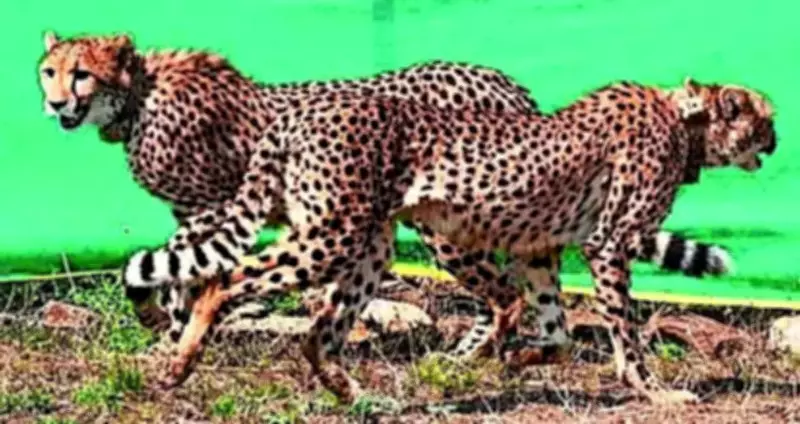
The NTCA has hailed this movement as a success story of India's Project Cheetah, emphasizing its active coordination with state forest departments. The cheetahs, identified as KP-2 and KP-3, are under 24×7 GPS and radio-collar monitoring by an inter-state team, ensuring their safety and tracking their movements in real-time.
According to updates shared by the authority:

- KP-2 has been located in the Mangrol range of Baran district.
- KP-3 entered the Banjh Amli Conservation Reserve after traveling approximately 60–70 kilometers from KNP.
- Both animals are currently positioned about 6 kilometers apart on either bank of the Parvati river.
Field teams deployed from Kishanganj and Anta ranges have been continuously tracking these cheetahs, showcasing the robust monitoring mechanisms in place.
Natural Behavior and Conservation Strategy
In its report to the environment ministry, the NTCA highlighted that long-distance dispersal across landscape boundaries is a well-documented, natural territorial behavior in cheetahs. The Project Cheetah Action Plan explicitly anticipates and provides for such interstate movement within the Kuno–Gandhi Sagar metapopulation landscape, underscoring the importance of adaptive conservation strategies.
Thriving Cheetah Population in India
India currently boasts a thriving population of 48 cheetahs, which includes 28 India-born cubs. In a recent development, nine adult cheetahs—comprising six females and three males—were received from Botswana and released into quarantine enclosures at KNP on February 28. This group represents the third batch of cheetahs flown into India as part of ongoing reintroduction efforts.
The successful tracking and management of these cheetahs' movements demonstrate the effectiveness of collaborative conservation initiatives, paving the way for enhanced wildlife corridors and biodiversity preservation in the region.