

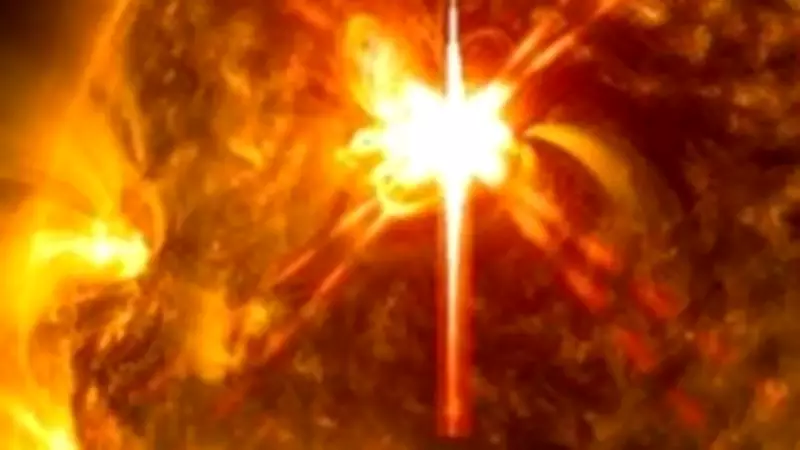
In a dramatic display of solar power, our Sun has unleashed a significant series of solar flares over the past 24 hours, marking one of the most intense periods of solar activity recorded this year. Astronomers and space weather scientists have documented at least 18 M-class flares and three powerful X-class flares, with the standout event being an extraordinary X8.3 flare. This particular eruption now stands as the strongest solar flare recorded so far in 2026, highlighting the Sun's volatile nature.
Understanding Solar Flare Classification and Energy
Solar flares are sudden, explosive releases of magnetic energy from the Sun's surface, manifesting as bursts of radiation across the electromagnetic spectrum. Scientists classify these events based on their strength using a logarithmic scale that begins with A, B, and C classes, progresses to M-class, and culminates in the most potent X-class flares. Each step up in this classification represents a tenfold increase in energy output, making X-class flares the most intense explosions our Sun can produce. An X8.3 flare, such as the one recently observed, sits very high on this scale, indicating an exceptionally powerful release of energy that can have significant effects on space weather and Earth's technological systems.
Source of the Activity: Sunspot Region 4366
This recent surge in solar activity originates from a fast-growing and magnetically complex sunspot known as region 4366. Over the last few days, this region has expanded rapidly and exhibited unstable magnetic behavior, creating the perfect conditions for such intense flare eruptions. The strongest flare, the X8.3 event, peaked at 6:57 pm EST on February 1, releasing a torrent of strong ultraviolet and X-ray radiation. This radiation directly impacted the upper layers of Earth's atmosphere, leading to immediate and noticeable disturbances.

Immediate Impacts on Earth and Radio Communications
The effects of this solar activity were felt across the globe, particularly in the South Pacific region, which experienced R3-level radio blackouts. According to data from the US National Oceanic and Atmospheric Administration's Space Weather Prediction Center, shortwave radio signals were significantly disrupted in eastern Australia and New Zealand. These blackouts can affect aviation communications, maritime operations, and emergency services, underscoring the real-world consequences of space weather events.
Monitoring for Coronal Mass Ejections and Future Risks
Scientists are now closely monitoring for any coronal mass ejections (CMEs) that may be linked to these flares. Early assessments suggest that most of the solar material ejected from the X8.3 flare is likely to miss Earth, though a slight impact remains possible around February 5. If this material does interact with Earth's magnetosphere, it could briefly increase geomagnetic activity, potentially disrupting satellite operations, power grids, and enhancing the chances of auroral displays at higher latitudes.
Ongoing Solar Activity and Forecasts
Sunspot region 4366 remains highly active and is gradually turning more directly towards Earth, increasing the likelihood of further solar eruptions. Space weather forecasters anticipate that this region will continue to produce significant solar activity in the coming days, necessitating vigilant observation. As our reliance on technology grows, understanding and predicting such solar events becomes increasingly crucial for mitigating their impacts on global infrastructure and communications.






