

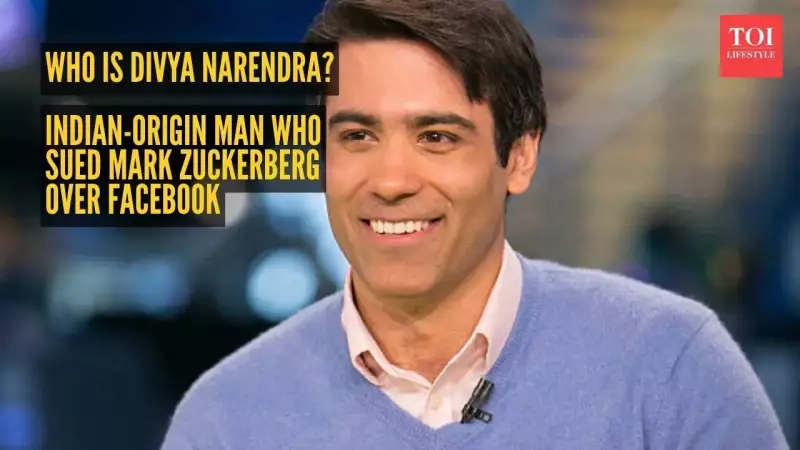
Long before Facebook became a global phenomenon, the blueprint for a university-exclusive social network was first conceived at Harvard University. The mastermind behind this original idea was not Mark Zuckerberg, but an Indian-origin student named Divya Narendra. This is the lesser-known story of the intellectual origins of social networking and the monumental legal battle that followed.
The Prodigy Behind Harvard Connection
Divya Narendra was born in March 1982 in the Bronx, New York, to Indian immigrant parents who were both doctors. Growing up in Bayside, Queens, he displayed exceptional academic talent, attending the prestigious Horace Mann School. Narendra's journey led him to Harvard University, where he graduated in 2004 with an A.B. cum laude in Applied Mathematics.
It was at Harvard in 2002 that Narendra first envisioned a digital platform where students could connect using verified university identities. He shared this groundbreaking concept with classmates Cameron and Tyler Winklevoss. Recognising its potential, the trio embarked on a project initially called Harvard Connection, later renamed ConnectU.

The Birth of Facebook and the Alleged Betrayal
In November 2003, needing a skilled coder to bring their vision to life, Narendra and the Winklevoss twins hired a fellow student, Mark Zuckerberg, who was gaining a reputation on campus for his programming abilities. Internal communications from the time show detailed discussions about platform features, including user profiles.
However, Zuckerberg allegedly delayed the launch of Harvard Connection. Then, on February 4, 2004, he independently launched TheFacebook.com. The site bore a striking resemblance to the Harvard Connection concept, requiring a Harvard.edu email address and being designed exclusively for Harvard students.
This move sparked immediate allegations of intellectual property theft. In 2004, Divya Narendra and the Winklevoss twins filed a lawsuit against Mark Zuckerberg, accusing him of breach of contract and misappropriation of their idea.
The Legal Settlement and Life After Facebook
The high-profile legal dispute stretched on for four years. It finally reached a resolution in 2008 with a confidential settlement. Later revealed, the agreement granted Narendra and the Winklevoss twins a settlement of $20 million in cash and $45 million in Facebook stock, though Zuckerberg did not admit to any wrongdoing.
Unfazed by the Facebook chapter, Divya Narendra channeled his ambition into new ventures. In 2008, he founded SumZero, an exclusive, invite-only network for hedge fund professionals, analysts, and investors to share proprietary research. He serves as its CEO and founder. His business acumen extends to board memberships, including a position on the Board of Directors at the cryptocurrency exchange Gemini. According to Celebrity Net Worth, his estimated net worth stands at approximately $80 million.
On a personal note, Narendra married bond research analyst Phoebe White in June 2017 in Rye, New York. His story, often overshadowed by the Hollywood narrative in The Social Network, remains a pivotal chapter in the history of technology and entrepreneurship, highlighting a significant contribution from the Indian diaspora.






