Google Pixel 10 Shatters the Wall Between Android and iOS
In a move that has stunned the tech world, Google has announced a revolutionary feature for its new Pixel 10 series smartphones: the ability to share files directly with Apple devices using the coveted AirDrop protocol. This marks one of the most significant leaps in cross-platform compatibility, effectively bridging a long-standing gap between Android and iOS ecosystems. The development is particularly momentous for the Indian market, where users often navigate a mix of Android and Apple devices within families and friend circles.
How to Share Files Between Your Pixel 10 and an iPhone
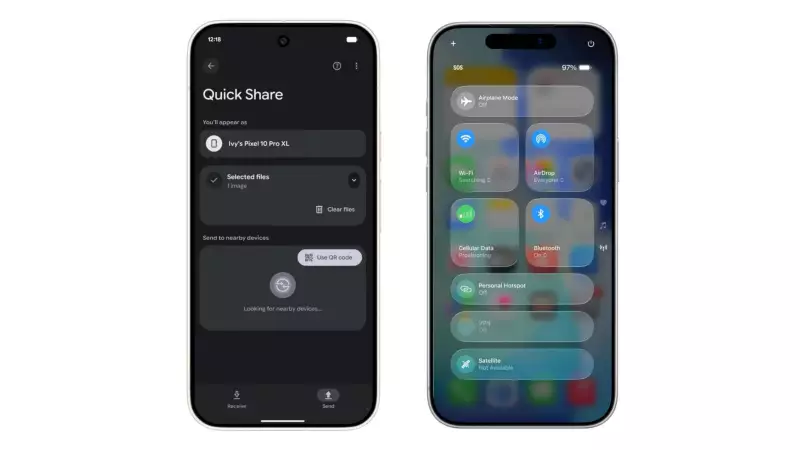
The process to initiate this seamless file transfer is straightforward. To send a file from a Pixel 10 to an iPhone, iPad, or Mac, the Apple device user must first temporarily set their AirDrop settings to allow discovery by ‘Everyone’. This setting is a standard security feature on Apple devices and will automatically revert back to its previous state after ten minutes. Once this is enabled, the Pixel 10 user can detect the nearby Apple device through the familiar Quick Share menu and send the file as they normally would.
On the receiving Apple device, the incoming transfer request appears identical to a standard AirDrop prompt from another iPhone. The recipient can simply accept it to begin the direct, peer-to-peer transfer. The functionality is not one-sided. The process works perfectly in reverse as well. If a Pixel 10 user sets their device to be discoverable, an Apple user can initiate an AirDrop transfer to the Android phone, which the Pixel owner can then approve, completing the exchange just as effortlessly.

Built by Google, Vetted for Security
In a crucial detail that underscores the technical achievement, a Google spokesperson confirmed that this new functionality was engineered entirely by Google’s internal teams, without any technical coordination or formal partnership from Apple. This independent development highlights Google's commitment to solving interoperability challenges on its own.
Addressing potential security concerns head-on, Google has emphasized the robust safety measures in place. The system does not rely on any workarounds or cloud servers to hand off data. Instead, the connection is direct and peer-to-peer, ensuring that no data is logged, routed through external servers, or subject to hidden information exchange. A Google spokesperson confirmed the feature underwent rigorous in-house security reviews and an independent third-party penetration test conducted by the cybersecurity firm NetSPI, pre-empting any privacy concerns from the Apple camp.
While Apple has not yet issued an official statement on this development, Google has expressed openness to future collaboration that could further enhance interoperability between the two rival platforms. For now, this groundbreaking feature is debuting exclusively on the Pixel 10 lineup. However, according to Google spokesperson Alex Moriconi, the company already plans to extend this capability to additional Android devices after the initial release, promising a future where seamless file sharing is the norm for everyone, regardless of their phone brand.