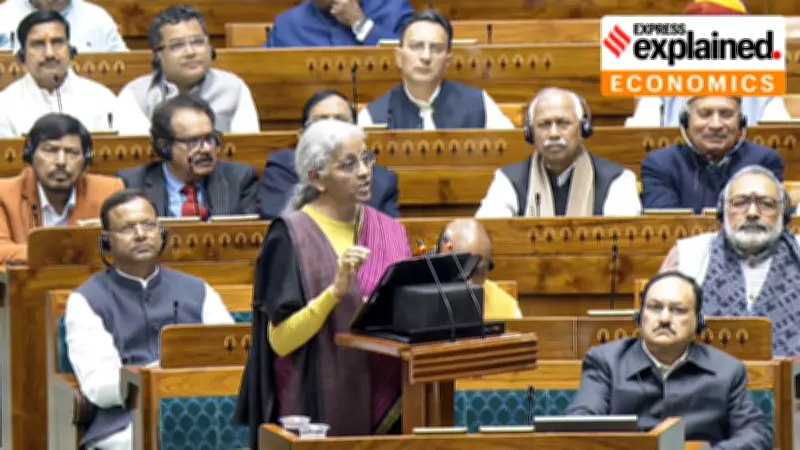
Finance Minister Nirmala Sitharaman, while presenting the Union Budget for 2026-27 in the Lok Sabha on Sunday, announced a significant move aimed at strengthening India's banking system. She proposed the constitution of a high-level committee to comprehensively review the banking sector and align it with the country's next phase of growth, particularly in the context of the Viksit Bharat vision.
Strengths and Challenges in Banking
During her budget speech, Sitharaman highlighted the robust health of India's banking sector, pointing to strong balance sheets, historic highs in profitability, improved asset quality, and extensive coverage exceeding 98 percent of villages across the nation. "At this juncture, we are well placed to futuristically evaluate the measures needed to continue on the path of reform-led growth of this sector," she stated.
However, the announcement comes amid ongoing challenges, particularly in deposit mobilization. Banks have been finding it difficult to raise deposits, as noted by State Bank of India Chairman C S Setty, who recently called for tax parity between bank deposits and equity investments. He argued that higher taxes on deposits are making fund mobilization challenging, as savers increasingly divert their funds to the stock market.

Objectives of the High-Level Committee
The proposed high-level committee on banking for Viksit Bharat is tasked with a comprehensive review of the sector. Its mandate includes aligning banking operations with India's growth trajectory while safeguarding financial stability, promoting inclusion, and ensuring consumer protection. This initiative reflects the government's commitment to futuristic reforms in the financial landscape.
Vivek Iyer, Partner and Financial Services Risk Leader at Grant Thornton Bharat, commented on the development, noting that the banking sector's priorities need re-examination to support economic growth and achieve the Viksit Bharat vision. "The proposed reforms will span commercial and co-operative banks alike, and the establishment of a high-level committee on banking will help drive this agenda. Overall, this is a significant credit-positive development for the banking sector," he said.
Broader Financial Sector Reforms
Beyond banking, the budget outlined several other key financial sector initiatives:
- Restructuring of REC and PFC: Sitharaman announced plans to restructure the Power Finance Corporation and Rural Electrification Corporation as a first step to achieve scale and improve efficiency in public sector non-banking financial corporations. Shares of REC and PFC rose significantly during intraday trades following the announcement.
- Review of Foreign Exchange Rules: A comprehensive review of foreign exchange management rules was proposed to create a more contemporary and user-friendly framework for foreign investments, consistent with India's evolving economic priorities.
- Corporate Bond Market Enhancements: The budget introduced a market-making framework with access to funds and derivatives on corporate bond indices, along with a Total Return Swap on corporate bonds to boost liquidity and investment.
- Municipal Bonds Incentive: To encourage larger cities to issue municipal bonds, an incentive of Rs 100 crore was proposed for single-bond issuances exceeding Rs 1,000 crore, while continuing support for smaller towns under the AMRUT scheme.
Context and Future Vision
This move builds on previous government efforts, such as the 'PSB Manthan' program organized by the Department of Financial Services in September last year, which deliberated strategies to transform public sector banks into globally competitive institutions. The government aims for at least one or two state-run banks to rank among the top 20 globally by 2047. Currently, SBI is the only public sector bank in the top 100, ranked 43rd by asset size.
The budget's focus on banking and financial sector reforms underscores a strategic approach to leveraging India's economic strengths while addressing existing challenges. With a strong foundation in place, these measures are poised to drive sustainable growth and stability in the years ahead.