AI Boom Sparks Memory Chip Crisis, Hitting Budget Device Prices
The relentless global artificial intelligence boom is now directly impacting the pockets of millions of Indian consumers. Prices for budget smartphones and laptops in India have already increased by nearly 10%, and industry experts warn that a further escalation is likely in the coming year. This price surge stems from a critical supply shortage of memory chips, a fundamental component in these devices, which have seen their costs skyrocket by 50% since January.
The Root Cause: AI's Insatiable Appetite for Chips
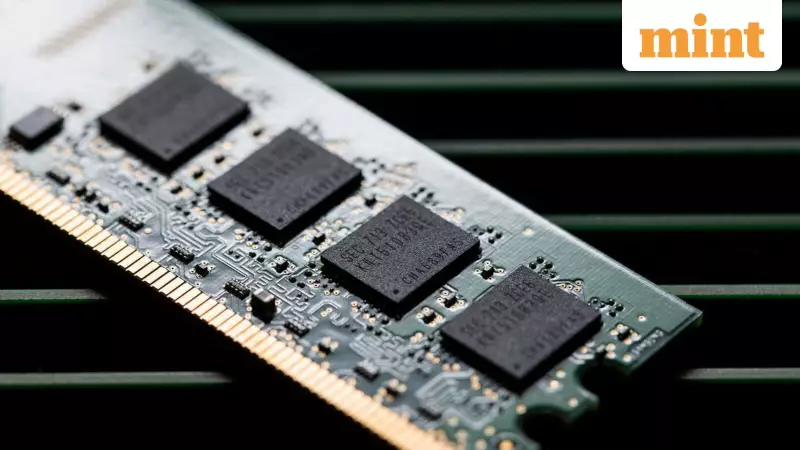
The core of the problem lies in a major shift in manufacturing focus by the world's leading memory chip producers. Giants like Micron Technology in the US and South Korea's Samsung and SK Hynix are now dedicating a significant portion of their production lines to high-bandwidth memory (HBM) chips. These specialized chips are essential for the powerful graphic processing units (GPUs) sold by companies like Nvidia to run artificial intelligence data centers.
This pivot towards catering to the high-margin AI industry has created a severe supply deficit for the legacy, general-purpose memory chips used in everyday consumer electronics like smartphones and laptops. The situation is so acute that an additional 50% price hike for these memory chips could be imminent, which would directly translate to devices becoming more than 10% more expensive over the next year.

Thin Margins and Stagnant Sales Compound the Problem
The impact is most severe in the budget segment because a single memory chip typically constitutes 10% to 15% of a device's manufacturing cost, amounting to an average of $30 to $60 for budget phones and laptops. This price shock is devastating for an industry segment that operates on razor-thin margins, often less than 10% for smartphones under ₹20,000 and laptops costing less than ₹50,000.
These affordable categories are the backbone of the Indian market. According to reports from the market research firm IDC, they accounted for a massive 60% of the 70 million smartphones and 5 million laptops sold in the country in the first half of this year. The price hikes threaten to prolong a period of stagnant sales that the industry has been grappling with since 2021.
Bharath Shenoy, Research Manager at IDC India and South Asia, highlighted the sensitivity of the market. He stated that even a 10% price increase could cause value-conscious buyers to postpone their purchases, potentially leading to a sales slowdown that may last until at least June 2026.
Industry Reactions and Brokerage Warnings
Major device makers are already feeling the pressure. Lu Weibing, Global President of Beijing-based Xiaomi, openly acknowledged the severe pricing pressure on smartphones. In a post-earnings call, he anticipated that the pressure would be "much heavier next year" and that consumers should expect a "sizeable rise in product retail prices." A Xiaomi India spokesperson confirmed that the "AI supercycle" has triggered an industry-wide surge in memory costs, hinting at broader price revisions in 2026.
The financial markets are also taking note. Prominent brokerages have downgraded the stocks of key players. Nomura downgraded Xiaomi's stock on November 17, citing the looming cost pressures. On the same day, Morgan Stanley downgraded Lenovo Group, warning of a "significant earnings impact for every 10% increase in memory costs."
Tarun Pathak, Research Director at Counterpoint Technology Market Research, confirmed that the low-end smartphone market is the most vulnerable. He revealed that price hikes of 6-8% have already been observed in some smartphones, particularly in the under-₹20,000 segment, and that new product launches will inherently come with higher price tags.
Interestingly, a senior supply chain official familiar with Apple's strategy indicated that iPhone prices are unlikely to be affected, as the company bakes such supply chain factors into its initial product pricing.