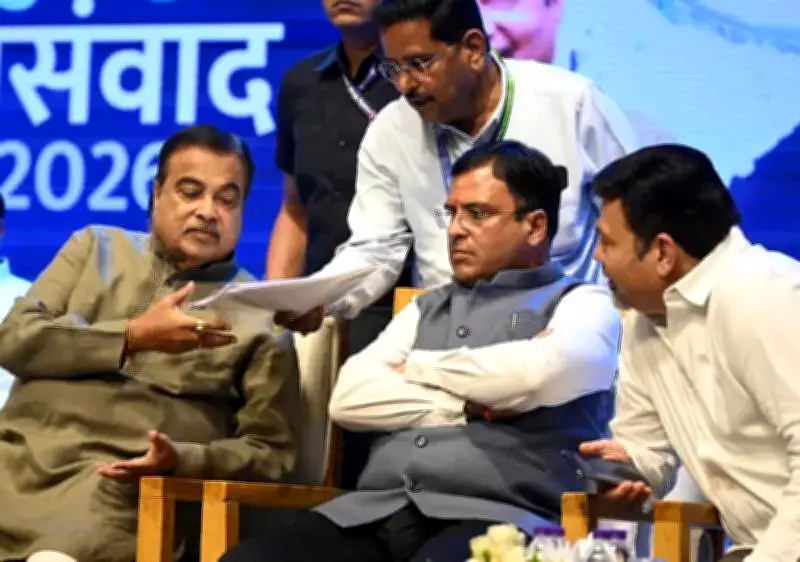
The Tamaswada village in Wardha district's Seloo taluka, once plagued by recurring water scarcity, crop losses, and agrarian distress, has gained national recognition for its scientific water conservation model. The much-discussed 'Tamaswada Pattern' took center stage at the 'Nagpur Jalsamvad-2026' conference, a two-day event spearheaded by Union minister Nitin Gadkari and inaugurated on Sunday at Dr Vasantrao Deshpande Hall in Civil Lines.
Background of the Initiative
Developed under the Purti Sinchan Samruddhi Kalyankari Sanstha, the brainchild of Gadkari, which is celebrating its silver jubilee this year, the project was presented as the organization's flagship water conservation initiative. Implemented between 2010 and 2012 in the Tamaswada nullah region, the model focused on scientific rainwater and groundwater management through watershed-based development.
Recognition and Replication
The model received recognition from the Union Ministry of Jal Shakti and the Central Ground Water Board as the 'Tamaswada Pattern'. It was also appreciated by NITI Aayog and several national and international water conservation organizations, besides receiving multiple awards. The 'Tamaswada Pattern' has been replicated at nearly 25 locations with support from industries, consultants, and social organizations.

Technical Interventions
The intervention involved deepening and widening of the main Moti nullah and tributary drains from source to confluence, removal of encroachments, desilting, and scientific assessment of local topography to improve groundwater recharge. Organizers said the approach slowed the flow of rainwater and increased percolation instead of allowing runoff.
Impact and Benefits
Data shared during the conference showed the initiative covered nearly 100 kilometers of main and tributary drains across around 24 rural and dryland locations. The project reportedly created surface water storage capacity of nearly 2.6 million cubic meters and annual groundwater recharge of around 6 million cubic meters.
According to organizers, the intervention enabled protective irrigation across nearly 10,000 hectares (25,000 acres) through improved groundwater availability in wells and other sources. Nearly 5,000 families and around 30,000 people associated with farming and animal husbandry directly benefited, while drinking and domestic water access improved for nearly one lakh people across about 60 villages in Nagpur and Wardha districts.
The project also helped protect nearly 200 hectares (500 acres) from flooding and water-related damage, increasing cultivable land in several villages. Within a few years, wells and borewells reportedly remained recharged for longer periods, while irrigation for both kharif and rabi crops became possible.
Economic and Community Impact
An economic survey conducted in 2017-18 reportedly recorded increased agricultural production, improved rural economic stability, and assured irrigation across thousands of acres. Minister of state Pankaj Bhoyar, whose assembly constituency includes Tamaswada village, said the model has since become a recognized example of community-driven water conservation.