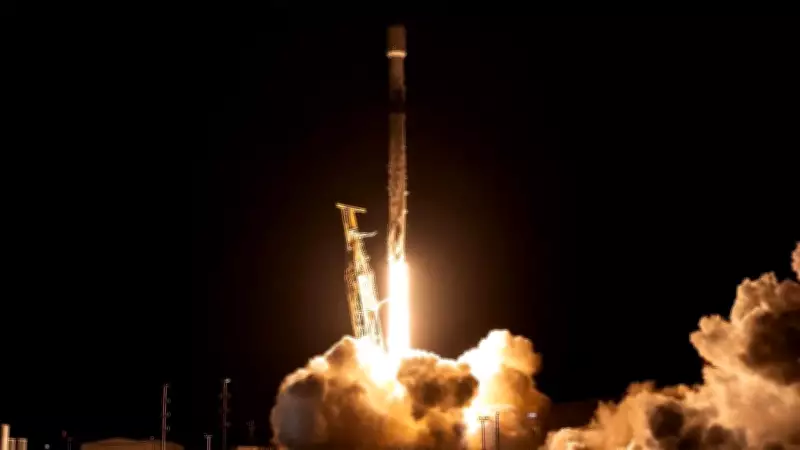
SpaceX Transporter-16 Mission Deploys 119 Satellites in Major Launch Success
On March 30, SpaceX achieved another milestone with the successful launch of its Transporter-16 mission from Vandenberg Space Force Base in California. This event marked the 21st launch from Vandenberg SFB in 2026, further solidifying SpaceX's dominant position in the commercial space industry. The Falcon 9 rocket lifted off from Space Launch Complex 4 East (SLC-4E), carrying a diverse array of microsatellites and cubesats into Sun-Synchronous Orbit (SSO).
Affordable Access to Space for Global Entities
The Transporter-16 mission served as a dedicated rideshare, deploying 119 payloads that represented over 20 countries. These included international startups, research institutions, and government agencies, all leveraging SpaceX's cost-effective model to send their products into orbit. The rideshare approach significantly reduces financial barriers, enabling smaller organizations to participate in space exploration by sharing launch costs on a single rocket.
Key Payloads and Their Global Impact
Among the notable payloads was the National Geospatial-Intelligence Agency's (NGA) MagQuest project, which utilized three CubeSats to measure Earth's magnetic fields. This data is crucial for maintaining the World Magnetic Model (WMM), a system essential for accurate global navigation in GPS devices and commercial vessels.

Another significant deployment was the UK's Space-based PhOtonics for Quantum Communication (SPOQC) satellite, a 12U CubeSat. This demonstrator aims to test an 'unhackable' method of transmitting quantum-encrypted photons from space to ground stations, representing a pioneering step toward a secure quantum internet resilient against future cyber threats.
Reusability and Landing Achievements
The Falcon 9 first-stage booster executed a successful Return-to-Launch-Site (RTLS) landing at Landing Zone 4 (LZ-4) shortly after separation from the second stage. This recovery underscores SpaceX's commitment to reusability, enhancing cost efficiency and sustainability in space missions. Unique to Vandenberg SFB launches, the RTLS landing often produces an audible sonic boom along Central California's coastline due to atmospheric deceleration.
Implications for the Future of Space Exploration
This mission highlights how SpaceX's innovative approaches, such as rideshare programs and reusable boosters, are democratizing access to space. By lowering costs and increasing launch frequency, SpaceX enables a broader range of entities to conduct research and deploy technology in orbit, fostering advancements in navigation, communication, and scientific discovery.