The Hidden Ambition of Small Evergreen Shrubs
The tranquillity of the garden centre at this time of year is an illusion. When walking between the rows of diminutive evergreen shrubs growing in their pots, one can easily be led into believing that such little green gems would forever remain decorative accents in the midst of flower beds. At this point, the shrubs are ideal candidates for being the much-needed filler plants, compact in nature and able to fit into the nooks and crannies of your garden edge. However, after a few years, you may find yourself embroiled in a fight with your garden border.
It is not the choice of these plants that is in question, but our failure to recognise their ambition. The evergreen shrubs of small size become the unseen backbone of the garden since they do not hibernate when there is frost in the air. It will be you watching your beloved summer flowers fade away, while all the time those plants will stay there and hold up the whole composition. Unfortunately, because of the stability of these plants, we often overlook their need for negative space.
Year-Round Structure and Foundation
As pointed out in the Royal Horticultural Society (RHS) advice on Evergreen Shrubs, these shrubs are the year-long structure and foundation of any garden design. They are not just filler plants but are essential for anchoring the whole garden. When planted too densely, one starts to lose sight of their form. Instead of several separate, well-defined shapes of the shrubs, you get a mass of green that hides everything else you tried so hard to incorporate into the picture.

Weaved, Not Wedged Borders
To create a professional-looking border, one does not need to stuff their garden as much as possible. In reality, many people start their garden design with a mindset similar to assembling a puzzle, where all spaces are to be filled in immediately. But the result of this approach is the same as stuffing a bed of clothes in a closet – the border is going to look messy very soon. One needs to consider that every plant has its space around it.
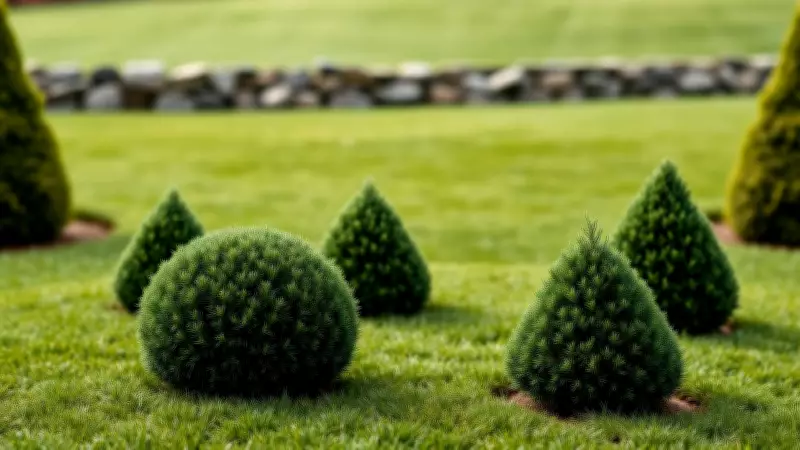
The RHS study on Border Shrubs suggests that the most successful designs are those where plants are woven throughout rather than wedged in. Small evergreens act as the connecting threads in this tapestry. By leaving more space than feels natural at planting time, you allow each shrub to develop its own unique silhouette. This is particularly important if you plan on clipping your shrubs into formal shapes. Formal gardening relies on crisp, clean lines, and those lines vanish the moment two shrubs start to compete for the same sunlight.
Spacing also makes an incredible difference in the well-being of your plant. Evergreens planted too close to each other will have decreased airflow, making the inside part of the shrub a great place for insects or fungi. Neatness equals healthiness, and allowing the necessary space to grow will guarantee that your backbone plants remain bright and verdant all the way down to the bottom, instead of losing their lower leaves under the shadow of another plant.
These plants form the garden's year-round structure, requiring ample space to develop their unique shapes and prevent overcrowding.
Winter Reveal Planning
There is no more interesting motivation to allocate additional space between your small evergreens than the so-called winter reveal. When summer starts blooming, with June and July at its peak, a bit of overcrowding on the edges may be acceptable since the delicate foliage of perennials will cover up the lack of space. However, with the first frost of the season, these perennials will vanish, leaving your garden's architecture to reveal itself.
With correct spacing, the winter garden will appear to be a work of structure and design. There will be distinct shapes created by each shrub against the mulch and the snow, giving an orderly appearance despite being in the midst of winter. When planted close together, the winter garden appears messy since the branches overlap and create an untidy appearance.

When talking about small shrubs for year-round interest in the RHS guide, one should know that experts advise people to take care of the colours of foliage rather than focusing on green leaves only. Indeed, when giving enough space to such plants, those colours will make the difference, including silver blues, bright golds, and cream variegates. In overcrowded beds, however, such details may go unnoticed because everything gets lost among greenery. Treating small evergreens as important actors rather than chorus members will keep your garden well-groomed and pretty.