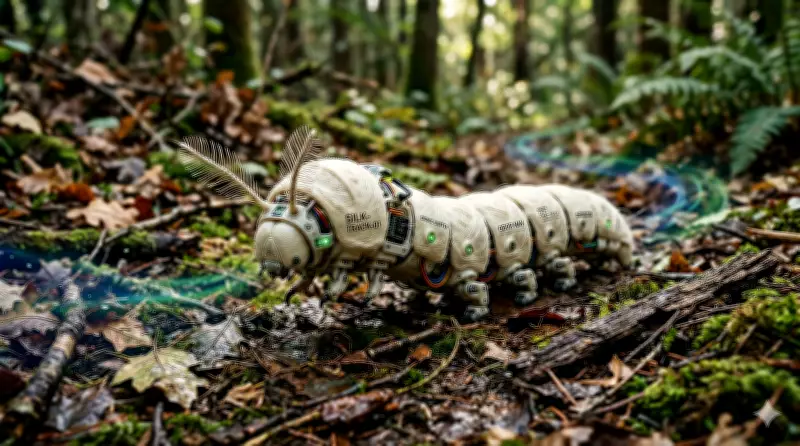
Silkworm-Inspired Robot Masters Odor Tracking Even After Sensor Failure
For years, scientists have dreamed of creating robots that can "smell" their way through complex environments, but a major limitation has always loomed: what happens if the robot loses a critical sensor? In a groundbreaking fusion of biology and engineering, researchers have developed a new robot inspired by the humble silkworm moth that can continue searching for odors even after losing a sensor. This innovation not only mirrors nature's remarkable adaptability but also opens doors to numerous practical applications, from disaster relief operations to environmental monitoring.
How the Silkworm Moth Inspired This Odor-Tracking Robot
The inspiration for this technological leap comes from the silkworm moth (Bombyx mori), renowned for its exceptional ability to detect pheromones. Despite having a small brain, the moth can locate a mate by following faint scent trails carried by the wind. Even more impressively, research published in npj Robotics reveals that "the silkworm moth... can maintain effective navigation using only one antenna." This biological trait has now been harnessed to create a robot that doesn't require perfectly symmetrical sensors to function.
A Robot That Functions With Just One Sensor
Traditional odor-tracking robots rely on at least two fully operational sensors to detect and move toward an odor source. If one sensor fails, the robot's performance is severely compromised. However, this new approach changes the game entirely. Instead of using conventional algorithms, the robot employs a behavior-based method inspired by insects. When a sensor fails, the robot doesn't "panic" but adapts its movements to track odors with the remaining sensor. Studies show that its success rate remains unchanged even after sensor failure, marking a significant shift from precision-based robotics to resilient, adaptive designs.

Why Odor-Tracking Robots Matter
Odor-based navigation, also known as machine olfaction, is gaining traction as a field with vast practical potential. Robots equipped with this capability could locate survivors in disaster zones, trace gas leaks, or identify hazardous substances. Researchers from the Research Organisation of Information and Systems (ROIS) involved in this project state, "these robots could play pivotal roles in disaster response, hazardous material and explosive detection, and environmental monitoring." Unlike sniffer dogs, which require training and can tire quickly, these robots could operate continuously in dangerous areas without risking human lives.
A Step Toward Smarter, More Resilient Robotics
This development aligns with a broader trend in science: learning from nature to solve complex engineering challenges. Insects, though simple, have evolved efficient survival mechanisms over millions of years. By replicating these mechanisms, scientists are creating robots that combine intelligence with flexibility. The silkworm-inspired robot exemplifies this, demonstrating that sensor loss isn't a failure but an opportunity for adaptation. As the field of robotics continues to evolve, such innovations could revolutionize how robots operate in real-world scenarios, making them more robust and versatile than ever before.