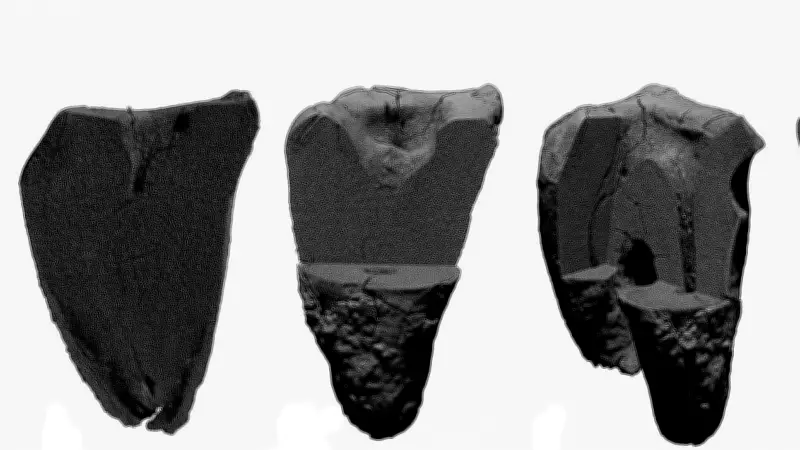
Neanderthals performed advanced dental treatments, including caries removal, approximately 400,000 years ago, predating modern humans. This discovery challenges previous assumptions about the cognitive abilities of this ancient species.
Prehistoric Dental Care
Neanderthals used sharp tools to treat tooth cavities around 400,000 years ago, demonstrating advanced medical knowledge. The finding suggests that these hominins had a sophisticated understanding of dental hygiene and pain management.
Neanderthal Intelligence
Despite being a separate species, Neanderthals exhibited high intelligence, social values, and tool-making skills. This dental procedure is further evidence of their capacity for complex problem-solving and care for others.

Earliest Dental Treatment
A molar from Chagyrskaya Cave in Siberia shows intentional drilling to remove caries, making it the earliest known dental treatment. The tooth, part of a collection of 26 dental specimens from the cave, displays clear marks of drilling with a sharp stone tool.
Neanderthal Survival
The patient likely survived the procedure, though the absence of filling suggests a chronic infection risk. This indicates that Neanderthals may have had knowledge of antiseptic techniques or relied on natural healing processes.
Toothpick Use
Neanderthals also used toothpicks to alleviate pain from inflammation and remove food debris. This habit is evidenced by grooves found on teeth from various archaeological sites.
Key Statistics
- Timeframe of Neanderthal existence: 400,000 to 40,000 years ago
- Number of dental specimens found in Chagyrskaya Cave: 26
- Total fossils excavated from Chagyrskaya Cave: 70
This discovery, processed with AI and reviewed by DH Digital Team, adds a new dimension to our understanding of Neanderthal capabilities and their place in human evolution.