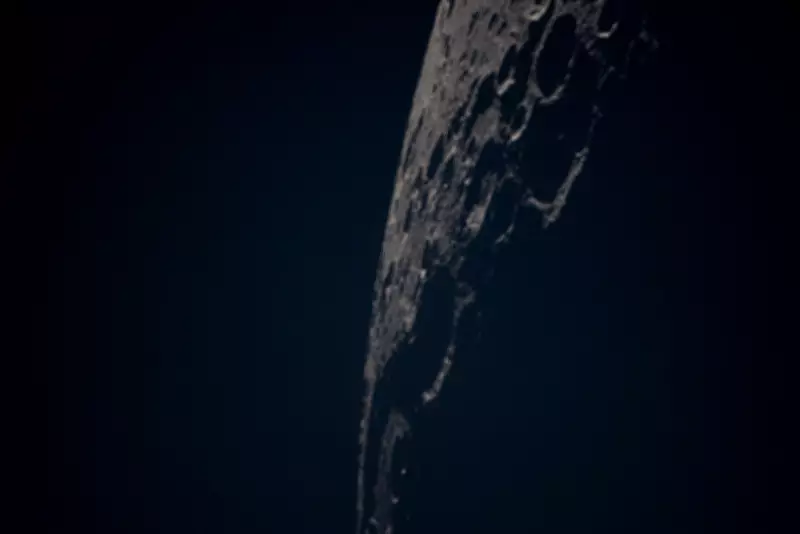
NASA Unveils Breathtaking Artemis II Images of Earth and Moon from Deep Space
NASA has released a spectacular new collection of photographs captured during the historic Artemis II mission, providing a dramatic and unprecedented glimpse of Earth and the Moon from the depths of space. The images, taken on April 6, include a stunning crescent Earthrise and rare close-up views of the Moon's far side—regions that have remained largely unseen by human eyes throughout history.
Mission Success and Record-Breaking Journey
The image release comes just days after the successful conclusion of the Artemis II mission, which saw four astronauts return safely to Earth with a Pacific Ocean splashdown on April 10. The nearly 10-day journey marked a significant milestone during the lunar flyby phase, when NASA's Orion spacecraft reached its maximum distance of approximately 252,756 miles (406,771 kilometers) from our planet.
This remarkable achievement surpassed the previous record set during the Apollo 13 mission while the spacecraft entered a rare solar eclipse phase on the far side of the Moon. Launched on April 1 from Kennedy Space Center aboard the powerful Space Launch System, the mission carried astronauts aboard the Orion capsule named Integrity.

The spacecraft traveled an impressive total distance of approximately 694,392 miles (over 1.1 million kilometers), venturing farther into space than any human mission since the legendary Apollo era of the 1960s and 1970s.
Detailed Lunar Surface Imagery
One of the most scientifically valuable images shows a detailed close-up of the Birkhoff crater on the Moon's far side. Located in the lunar highlands, this ancient impact crater—formed over billions of years of cosmic bombardment—appears under unique low-light conditions in the photograph.
The underexposed frame reveals subtle variations in surface texture and topography that would normally be difficult to observe. The specific lighting conditions highlighted differences in surface roughness and ejecta patterns, offering planetary scientists a clearer view of the crater's complex structure and surrounding terrain than ever before captured.
Quiet Moments in Space
Another compelling image shows NASA's Orion spacecraft photographed from a camera mounted on its solar array wings. This photograph was captured during a scheduled sleep period for the crew ahead of the mission's seventh day, documenting a quiet, peaceful moment during humanity's journey back to deep space exploration.
The image provides a unique perspective on the spacecraft's configuration and offers insight into the daily rhythms of life aboard the vessel during its extended journey through the space environment.
Pathway to Future Exploration
According to NASA officials, Artemis II represents a crucial stepping stone toward future crewed lunar landings under the ambitious Artemis program. The mission's success and the data collected—including these remarkable images—are paving the way for sustained human presence on and around the Moon in the coming years.
The photographs not only serve as stunning visual documentation of human achievement but also provide valuable scientific data that will inform future lunar exploration efforts. As NASA continues to push the boundaries of space exploration, these images stand as testament to both technological advancement and humanity's enduring curiosity about our place in the cosmos.