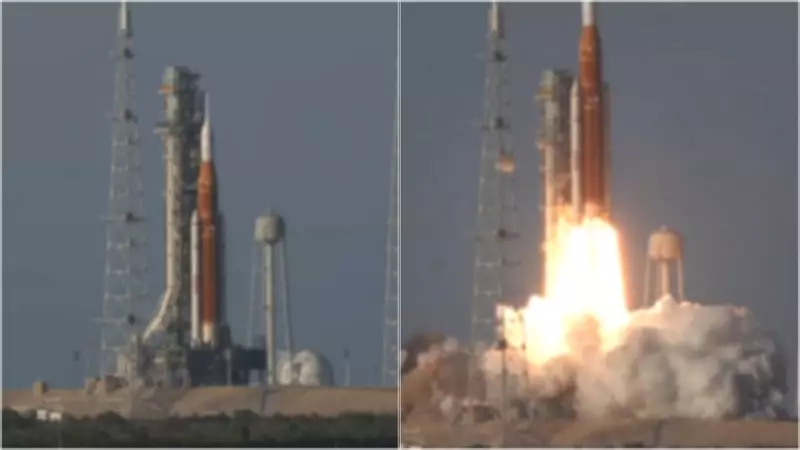
NASA's Historic Artemis II Launch Sends Astronauts Toward the Moon
In a monumental achievement for space exploration, NASA has successfully launched the Artemis II mission, propelling astronauts into orbit for the first human lunar mission in over 50 years. This landmark event, which took place on April 2, 2026, represents a significant step forward in humanity's quest to return to the Moon and beyond, building on the legacy of the Apollo missions that last saw humans on the lunar surface in 1972.
A New Era of Lunar Exploration Begins
The Artemis II launch marks the beginning of a new chapter in space travel, with NASA aiming to establish a sustainable human presence on the Moon. The mission involves a crew of astronauts who have embarked on a journey that will take them around the Moon, testing critical systems and technologies essential for future lunar landings. This orbital mission serves as a crucial precursor to Artemis III, which is planned to land astronauts on the lunar surface, potentially as early as the late 2020s.
The launch was conducted using NASA's powerful Space Launch System (SLS) rocket, which lifted off from Kennedy Space Center in Florida. The SLS, combined with the Orion spacecraft carrying the astronauts, demonstrated advanced capabilities designed to support deep space missions. This event was watched globally, with live video coverage allowing millions to witness the historic moment as the spacecraft ascended into orbit, symbolizing a renewed commitment to exploring our celestial neighbor.

Technological Innovations and Mission Objectives
Artemis II incorporates state-of-the-art technology to ensure the safety and success of the crew. Key objectives of this mission include:
- Testing the life support systems and radiation protection in the Orion spacecraft during a multi-day journey.
- Evaluating communication and navigation systems in the deep space environment beyond Earth's orbit.
- Conducting scientific experiments that will provide valuable data for future missions, including studies on human health in space.
- Preparing for the complexities of lunar orbit insertion and return trajectories, which are critical for upcoming landings.
This mission is part of NASA's broader Artemis program, which aims not only to return humans to the Moon but also to pave the way for eventual missions to Mars. The program emphasizes international collaboration, with partnerships involving space agencies from countries around the world, fostering global cooperation in space exploration.
Historical Context and Future Implications
The last time humans ventured to the Moon was during the Apollo 17 mission in 1972. Since then, robotic missions have advanced our understanding of the lunar environment, but Artemis II reignites the human element of exploration. This mission is expected to inspire a new generation of scientists, engineers, and explorers, much like the Apollo era did decades ago.
Looking ahead, the success of Artemis II could accelerate plans for establishing a lunar base, mining resources, and conducting long-term research. NASA officials have highlighted that this mission is a stepping stone toward more ambitious goals, including sustained lunar habitation and deeper space travel. The data gathered from Artemis II will be instrumental in refining technologies and strategies for these future endeavors.
In summary, the launch of Artemis II astronauts into orbit is a historic milestone that underscores NASA's leadership in space exploration. As the mission progresses, it promises to deliver groundbreaking insights and set the stage for humanity's next giant leap into the cosmos.