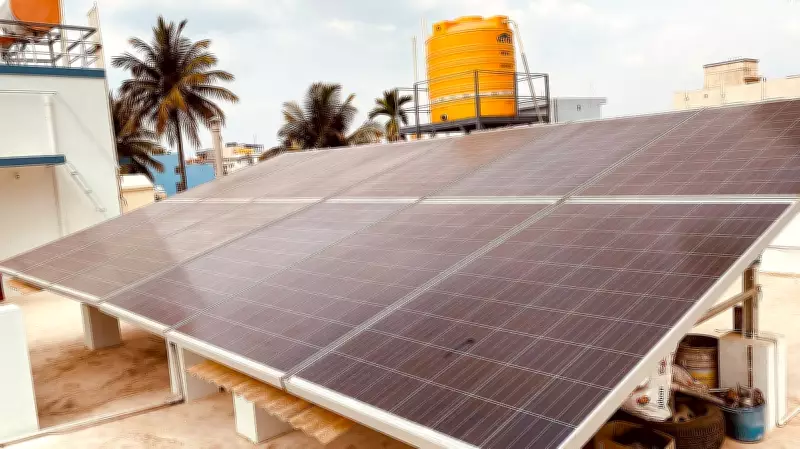
Karnataka is witnessing a growing interest in solar rooftop installations, even as the state government provides free electricity to households under a popular scheme. Industry experts note that the demand is now spilling over into the commercial sector, driven by long-term cost savings and sustainability goals.
Rising Adoption of Solar Rooftops
According to industry insiders, the number of residential solar rooftop installations has surged by 35% in the past year, despite the free power policy. Homeowners cite energy independence and reduced electricity bills for surplus power fed back to the grid as key motivators. “People want to hedge against future tariff hikes and contribute to green energy,” said a Bengaluru-based solar installer.
Commercial Sector Shows Interest
The trend is now extending to businesses, with hotels, offices, and factories exploring rooftop solar to cut operational costs. “We are seeing a 20% increase in inquiries from commercial entities,” noted a senior official at the Karnataka Renewable Energy Development Limited (KREDL). The commercial segment, which was earlier hesitant due to high upfront costs, is now leveraging government subsidies and net metering benefits.

Government Support and Challenges
The state government has set a target of 10 GW of solar capacity by 2030, and rooftop installations are a key component. Subsidies covering up to 40% of installation costs are available for residential and commercial users. However, challenges such as limited roof space in urban areas and initial investment remain. “We are working on innovative financing models to make solar more accessible,” a KREDL spokesperson said.
Impact on the Power Grid
The increased adoption of solar rooftops is also easing pressure on the state’s power grid, especially during peak hours. “Solar generation during daytime reduces our reliance on thermal power,” explained a Karnataka Power Corporation Limited (KPCL) engineer. The state has already avoided 2.3 million tonnes of CO2 emissions annually from solar installations.
With growing awareness and supportive policies, Karnataka’s solar rooftop revolution appears to be gaining momentum, even in the shadow of free power schemes.