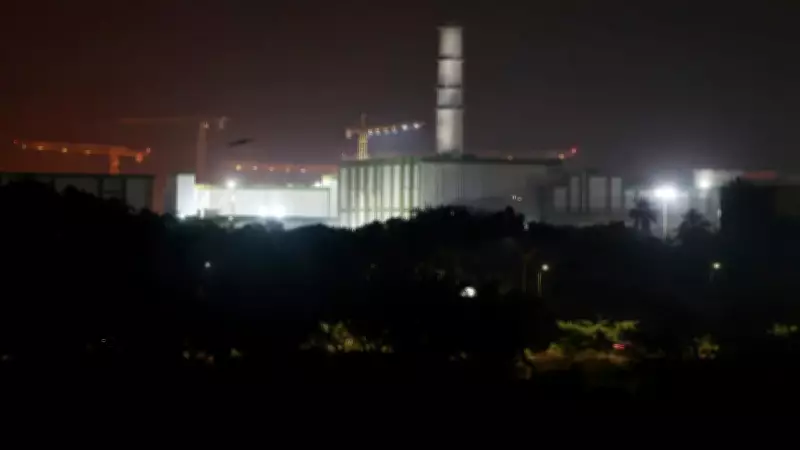
India's Nuclear Milestone: Fast Breeder Reactor Achieves Criticality in Tamil Nadu
In a landmark development for India's energy security, the Prototype Fast Breeder Reactor (PFBR) located at Kalpakkam on the southeastern coast has successfully achieved criticality. This pivotal event, which occurred on April 6, 2026, represents the realization of a vision first articulated by physicist Homi Bhabha over six decades ago and marks India's official entry into the second stage of its ambitious three-phase nuclear program.
Understanding Criticality: The Engine of Nuclear Power
While the term "criticality" might sound alarming in everyday conversation, in nuclear engineering it signifies a crucial achievement. Criticality occurs when a nuclear reactor establishes a self-sustaining chain reaction, confirming that the reactor core is operating precisely as designed. This milestone is essential before any power generation can commence, analogous to an engine turning over under its own power for the first time after extensive development.
The Breeder Reactor Difference: Creating More Fuel Than It Consumes
What distinguishes the PFBR from conventional nuclear reactors is its unique capability to produce more nuclear fuel than it consumes. Most nuclear plants worldwide, including those in India, operate on uranium fuel that is gradually depleted during operation. The PFBR, however, functions as a "breeder" reactor with a 500-megawatt electrical capacity.

This innovative reactor utilizes liquid sodium as a coolant and operates on a uranium-plutonium mixed oxide fuel. The reactor core is surrounded by a blanket of uranium-238, and through the fission process, this uranium-238 is transmuted into plutonium, effectively generating more fuel than the reactor consumes during operation.
Strategic Importance: India's Thorium Ambition
To fully appreciate the significance of this achievement, one must understand India's long-term nuclear strategy. The country's three-stage nuclear program begins with Pressurised Heavy Water Reactors that use natural uranium to produce electricity while generating plutonium as a byproduct. This plutonium then fuels the Fast Breeder Reactors in the second stage, represented by the PFBR.
The ultimate objective has always been thorium utilization. India possesses one of the world's largest thorium reserves, estimated at over 800,000 tonnes, primarily located in the monazite sands of Odisha, Tamil Nadu, Andhra Pradesh, and Kerala. While thorium cannot be used directly as nuclear fuel, the PFBR initiates the process of converting it into usable nuclear material through the production of Uranium-233, which will power the third and final stage of reactors.
This strategic approach addresses India's energy independence concerns, as the country currently imports much of its uranium while sitting atop vast domestic thorium reserves.
Development Journey and Regulatory Oversight
The path to this milestone has been lengthy and complex. Originally scheduled for completion in 2010, the project experienced multiple delays, with costs escalating from an initial estimate of Rs 3,492 crore to more than double that amount.
Prime Minister Narendra Modi visited Kalpakkam on March 4, 2024, to witness the commencement of "core loading," the process of inserting fuel into the reactor for the first time. Regulatory approval followed a meticulous safety review process conducted by the Atomic Energy Regulatory Board, including regular inspections by resident site observer teams and comprehensive evaluation of detailed safety submissions before granting permission for the "First Approach to Criticality."
Next Steps and Future Prospects
Achieving criticality does not mean immediate power generation for Tamil Nadu. The reactor will now undergo a series of low-power physics experiments to thoroughly assess and understand its behavior. Following this testing phase, power levels will be gradually increased, with each step requiring regulatory approval.
The subsequent milestone will involve connecting the reactor to the electrical grid for commercial power production, pending approval from the Atomic Energy Regulatory Board. Looking ahead, two additional fast breeder reactors are planned for Kalpakkam, contingent upon satisfactory performance evaluation of the PFBR by the Department of Atomic Energy.

Global Context and Long-Term Vision
Upon successful commercialization, India could join Russia as one of the few nations operating fast breeder reactors at a commercial scale. This represents a significant achievement in a strategically important technological niche.
Analysts emphasize that substantial work remains, including commercializing the technology at scale, reprocessing thorium-based spent fuel, and constructing additional reactors. These tasks will likely span decades, but with the PFBR now operational and sustaining a chain reaction, India has taken its most consequential step toward realizing a vision conceived during the early years of independence.
The PFBR, designed by the Indira Gandhi Centre for Atomic Research and built and operated by Bharatiya Nabhikiya Vidyut Nigam Limited, represents a collaborative achievement involving contributions from over 200 Indian industries, including numerous small and medium enterprises. This milestone not only advances India's energy independence but also positions the country as a potential leader in next-generation nuclear technology.