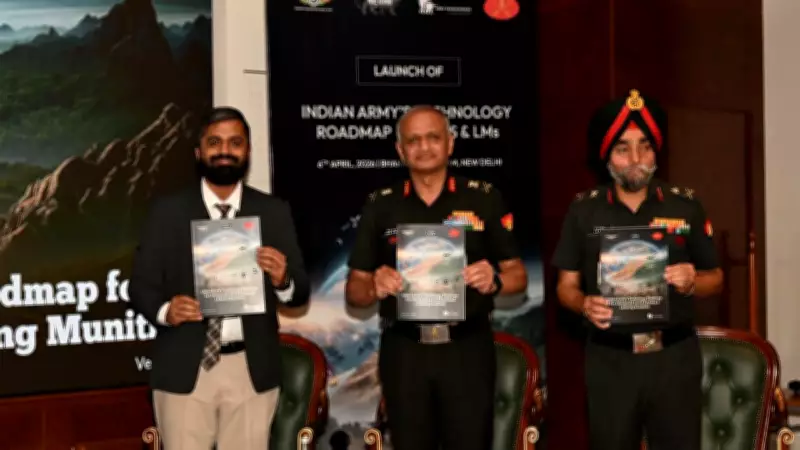
Indian Army Releases Pioneering Technology Roadmap for Drones and Loitering Munitions
In a landmark move to modernize its defense capabilities, the Indian Army has unveiled its first comprehensive technology roadmap specifically for unmanned aerial systems (UAS) and loitering munitions. This strategic document aims to provide long-term visibility into the force's requirements in this critical domain.
Strategic Document to Guide Industry and Academia
The nearly 50-page document, titled 'Indian Army's Technology Roadmap for Unmanned Aerial Systems and Loitering Munitions', was officially released by Lt Gen Rahul R Singh, Deputy Chief of the Army Staff (Capability Development & Sustenance), in New Delhi on April 6. This forward-looking blueprint offers clear, actionable guidance to industry stakeholders, academic institutions, and research & development organizations.
By outlining priority areas, the roadmap enables these entities to channel their investments, time, energy, and technological efforts more effectively. The initiative is designed to harness indigenous capabilities while aligning with the evolving demands of modern warfare.

Comprehensive Categorization of UAS and Loitering Munitions
The Indian Army's roadmap meticulously lists 30 distinct types of unmanned aerial systems and loitering munitions, organized across five key operational categories:
- Surveillance: Systems dedicated to reconnaissance and intelligence gathering.
- Loitering Munitions: Advanced drones capable of hovering and striking targets.
- Air Defense Roles: UAS designed to counter aerial threats.
- Special Roles: Drones for specialized military operations.
- Logistics: Unmanned systems for supply and support functions.
Learning from Global Conflicts and Fostering Collaboration
The document integrates crucial lessons from recent international conflicts, including the Russia-Ukraine war and conflicts in West Asia, where unmanned systems have demonstrated significant impact on battlefield dynamics. By clearly defining technological and operational priorities, the roadmap serves as a vital bridge between the Army's operational needs and technological development.
This structured, demand-driven approach is expected to catalyze greater participation from startups, micro, small, and medium enterprises (MSMEs), and academic institutions. It also aims to encourage long-term investments in this emerging technology sector, ensuring India's drone ecosystem evolves in a coordinated manner.
Security Concerns and Strategic Implications
During the release event, Lt Gen Rahul R Singh emphasized the sensitive nature of the document, urging stakeholders to exercise extreme caution and avoid sharing it with unauthorized persons. He specifically highlighted potential security risks, noting that neighboring countries like Pakistan and China might seek to obtain this strategic information.
Citing examples from the West Asia conflict, Lt Gen Singh pointed to the deployment of Iran-made Shahed-136 drones and America's reverse-engineered, cost-effective LUCAS (Low-Cost Uncrewed Combat Attack System) designed to counter such threats. "We all need to be aware of this and much, much more to make sure that in case there is a conflict, we act as a well-oiled machine," he stated.
Lt Gen Singh described the collaboration between the armed services, industry, and academia as a "troika", noting that engagement between the Army and industry has grown substantially in recent years.
Unprecedented Transparency in Defense Specifications
Maj Gen C S Mann, Additional Director General of the Army Design Bureau, highlighted the unprecedented nature of this initiative. He remarked that this marks the first time the Indian Army has shared such detailed specifications related to UAS and loitering munitions, reflecting the high importance attached to these capabilities.

The comprehensive document includes specific details such as equipment names, types, expected life cycles, approximate quantities, and information on various variants. This level of transparency is intended to provide clear direction for domestic development and manufacturing efforts, ultimately strengthening India's self-reliance in defense technology.