

Software Engineer's Vision: Turning Honnavar's Clear Skies into a Golden Star for Rural STEM Education
In the coastal town of Honnavar, renowned for its picturesque sunsets, a transformative educational project is taking shape under the guidance of Sandeep Hegde, a software engineer originally from the region but now based in Bengaluru. Through the Honatara Rural Space Observatory & Education Centre, Hegde aims to revolutionize access to astronomy and STEM (Science, Technology, Engineering, and Mathematics) learning for rural students, leveraging the area's pristine night skies.
The Meaning Behind Honatara: A Golden Star for Community Empowerment
The name Honatara carries deep symbolic significance, as explained by Hegde. 'Hon' or 'Honnu' in Kannada translates to gold, drawing from the town's name Honnavar, while 'Tara', derived from Sanskrit, means star. Together, they represent a 'golden star', embodying the project's aspiration to shine as a beacon of knowledge. This initiative is being developed under the Honavar Foundation, where Hegde serves as a trustee, focusing on bridging the educational divide between urban and rural areas.
Addressing the Urban-Rural STEM Gap with Clear Skies and Infrastructure
Hegde highlights a critical issue in STEM education: "While most observatories are concentrated in urban areas, it should be noted that urban skies are polluted, and even if you want to see stars, it is difficult. Honnavar has clear skies, but not the infrastructure". Honatara is designed to fill this void by serving as a community-level science hub, primarily targeting government school students and anyone with an interest in the cosmos. The facility will feature:

- An outdoor observation zone for night-sky viewing and solar observations.
- Hands-on demonstrations to enhance experiential learning.
- A ground floor with telescopes for quick deployment during group sessions.
- A rooftop observatory equipped with a motorized 360-degree rotating dome, advanced telescope mounts, controlled lighting, and lightning detectors.
To ensure accessibility, basic amenities such as storage, utilities, drinking water, and sanitation facilities will be provided for all visitors.
Overwhelming Public Response and Future Plans for Sustainability
The project has already garnered significant public interest. At a recent astronomy event in collaboration with the Bangalore Astronomical Society, nearly 800 people attended, despite having only four telescopes available. "We had only four telescopes and had to manage 800 people. That clearly shows the level of curiosity," Hegde remarked. Building on this enthusiasm, the observatory plans to install at least 10 additional telescopes and appoint dedicated staff to guide students and manage activities.
While access will remain free for local government school students, Honatara aims to sustain itself through astro-tourism. "Honnavar, a growing weekend destination, offers the potential to attract visitors interested in stargazing experiences, helping generate funds for maintenance, staff salaries, and equipment," Hegde explained. This dual approach ensures both educational outreach and financial viability.
Community Engagement and Progress Towards a 2026 Launch
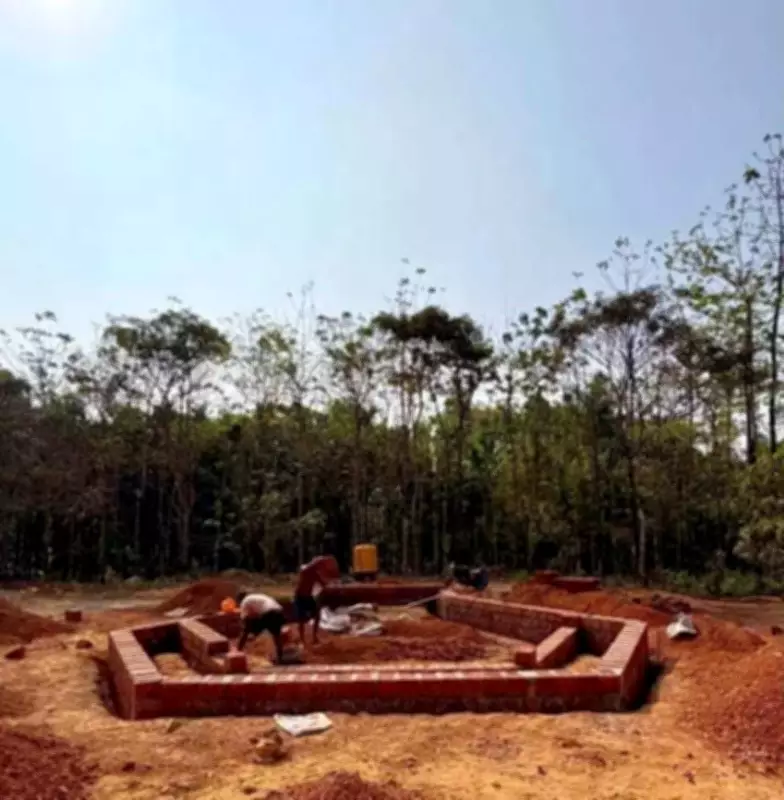
Beyond astronomy, the Honatara team has been actively involved in community initiatives, including beach cleaning drives and sea turtle conservation, alongside educational outreach in local schools. The foundation stone for the observatory was laid on February 22, with initial support from Vayavya Labs Private Limited. Experts in the field are advising on technical specifications, and a Dobsonian telescope has already been procured.
The Honavar Foundation is now actively raising funds to bring this vision to life by the end of 2026. Through Honatara, Sandeep Hegde is not just building an observatory but fostering a golden star of opportunity for rural youth, turning Honnavar's natural assets into a hub for scientific discovery and learning.






