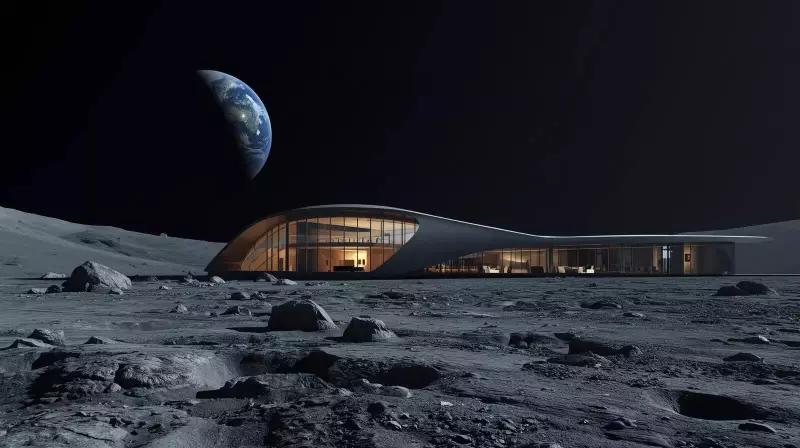
Gru Space Announces First Hotel on the Moon, Opens Early Reservations
Living on the Moon has long been a dream found in science fiction or distant government plans. That dream is now edging closer to reality. A private space company called Gru Space has revealed its ambitious project to build the first hotel on the lunar surface. The company has already started accepting early reservations, marking a significant shift in how we view our celestial neighbor.
This proposal combines commercial spaceflight with advanced inflatable habitat technology. It reflects a growing ambition for sustained human activity beyond Earth. While the technical hurdles are immense and the timeline remains uncertain, the initiative signals a new era. The Moon is increasingly seen not just as a symbolic target, but as a tangible destination for human enterprise.
How to Book Your Lunar Stay
For now, the lunar hotel exists primarily in concept art, detailed plans, and deposit agreements. However, Gru Space is treating it as a serious venture that could become operational within the next decade. The company has outlined a clear process for interested parties.

Interested applicants must first pay a non-refundable application fee of $1,000. If their application is successful, they are then invited to enter a formal deposit agreement. The company offers two primary deposit options: $250,000 or a full $1 million.
According to the company's published terms, these deposits are refundable for the first thirty days. Once the hotel is finally ready to welcome its first guests, the deposit amount will be deducted from the final total price. Gru Space also notes that selected guests will need to pass additional verification steps to confirm they are medically and financially fit for the extraordinary journey.
About Gru Space and Its Vision
Gru Space presents itself as a private company dedicated to developing long-term infrastructure on the Moon. Its most public-facing project is this small hotel, designed to sit directly on the lunar regolith and host paying visitors. The company is currently accepting reservations starting at one million dollars, with the alternative $250k deposit option available.
It is crucial to understand that making a reservation does not guarantee a specific flight date. Instead, it serves as an expression of serious interest and helps provide capital to fund the project's development. The final price for a stay is expected to exceed ten million dollars per guest, though Gru Space has not released a fixed figure. Applicants are informed they may need to provide extensive medical, personal, and financial documentation later in the process.
Why a Lunar Hotel Now?
Interest in the Moon has surged over the past ten years. National space agencies like ISRO and NASA have renewed their lunar exploration programs. Simultaneously, private launch companies have dramatically reduced the cost of sending payloads into space. This combination has created an opening for ventures that were once considered pure fantasy, including commercial tourism beyond Earth's orbit.
The concept of a lunar hotel fits into a broader pattern of space development. Proponents often discuss not just tourism, but also scientific research, resource testing, and the foundations for long-term human habitation. Gru Space frames its hotel project as part of this wider, practical shift toward a sustained human presence in space, rather than a one-off luxury experience.
The Building Plan: Inflatable Habitats on the Moon
According to Gru Space's published roadmap, the hotel would utilize inflatable habitat technology. These structures are launched in a compact, folded state and are expanded to full size only after they land on the lunar surface. This approach makes them much lighter and easier to transport than traditional rigid modules.
The initial hotel is planned to accommodate up to four guests at a time. It would be delivered to the Moon as a complete unit using a heavy lunar lander and then deployed on the surface. The design life for the habitat is currently estimated to be around ten years.

Gru Space highlights the stunning views of the lunar landscape and Earth as major attractions. The company also proposes various surface activities for guests, including guided moonwalks, driving experiments, and recreational demonstrations like low-gravity golf. These experiences, however, remain purely conceptual at this early stage.
The Roadmap to Opening
Gru Space has outlined several critical test missions that must occur before the hotel can welcome its first guests. The first mission, tentatively planned for 2029, would involve landing a pressurized test payload on the Moon. This payload would be used to assess environmental control systems and early construction methods, including experiments with using local lunar materials.
A second mission is targeted for 2031. This mission would focus on establishing a base inside a lunar cave. The payload would land near a natural pit, chosen for its inherent protection from radiation and stable temperatures. An inflatable habitat system would then be deployed inside the cave, allowing for more extensive testing of living conditions on a larger scale.
Only after these preparatory steps does the company propose delivering the first operational hotel module. The current target for this historic delivery is the year 2032.
Looking Beyond the First Hotel
Gru Space's vision extends far beyond the initial four-guest habitat. The company describes future missions aimed at scaling up lunar construction. These would employ ISRU systems—In-Situ Resource Utilization—and robotic equipment to build structures directly from lunar soil and rock.
The long-term plan suggests expanding guest capacity from four to ten and significantly extending the operational life of the habitats. Over time, this could support a more permanent human presence, with modular habitats protected by enclosures built from local materials.
Gru Space also loosely links this lunar work to even longer-term ambitions for human missions to Mars, though those ideas remain distant. For the present moment, the lunar hotel project exists in a fascinating space between bold experiment and serious promise. It is being watched closely by a global space industry that is still actively figuring out how humans might one day live, work, and thrive beyond the confines of our home planet.