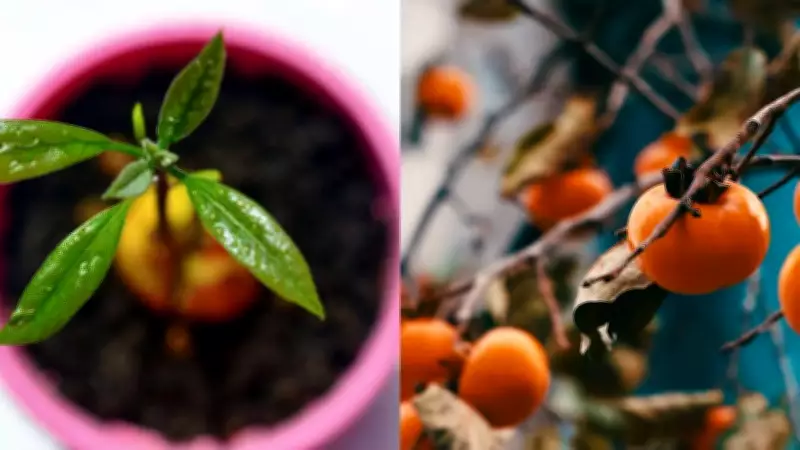
How to Grow Persimmon Trees in Containers
Do you have a perfectly ripe persimmon? It tastes like a mix of rich honey, brown sugar, and a hint of autumn. These gorgeous, orange-fruited trees are usually seen in large backyard orchards, but you don't need a sprawling estate to grow them. Thanks to their compact root systems and forgiving nature, persimmons do surprisingly well in containers. If you have a sunny balcony, a small patio, or a bright deck, you can harvest your own crop of these "fruits of the gods." Here is exactly how to pull it off, broken down step-by-step.
Choosing the Right Variety
Not all persimmon trees are created equal, especially for pot culture. Look for non-astringent varieties like 'Fuyu' or 'Jiro.' These trees naturally maintain a smaller, more manageable size and produce fruit that you can eat while it's still crisp, like an apple. If you prefer the jelly-like, ultra-sweet, astringent types, 'Saijo' is an excellent, compact choice that adapts beautifully to life in a container.
Picking the Perfect Pot
Persimmons have a deep taproot, so you need a container that prioritizes depth over width. Start with a pot that is at least 15 to 20 gallons (about 18 to 24 inches in diameter and just as deep). Make sure the pot has excellent drainage holes at the bottom. Terracotta or heavy glazed ceramic pots look beautiful, but lightweight resin or fabric pots make it much easier to move the tree around when the seasons change.

Soil and Planting
These trees hate sitting in soggy mud, so heavy garden soil is a no-go. Instead, use a high-quality, well-draining potting mix blended with a few handfuls of perlite or composted bark to ensure good aeration. When planting your bare-root or potted tree, place it at the exact same depth it was growing in its original container. Gently firm the soil around the roots and give it a thorough watering to settle everything in.
The Golden Rule: Sun and Water
Persimmons are sun-worshipers. Position your pot where it will receive at least 6 to 8 hours of direct sunlight daily. Because containers dry out much faster than the ground, you need to check the soil moisture regularly. Water deeply whenever the top two inches of soil feel dry to the touch. During the spring and summer growing season, feed your tree once a month with a balanced, organic fruit tree fertilizer. Avoid over-fertilizing with high-nitrogen blends, or you will end up with a massive bush of green leaves but no fruit.
Pruning and Shaping
Pruning is your main tool for keeping a potted persimmon at a manageable size. Do your heavy pruning in late winter while the tree is dormant. Focus on removing any dead, diseased, or crossing branches to open up the center of the tree to sunlight. You can also head back the main branches to encourage a bushier, more compact shape that won't become top-heavy and tip over in the wind.
Special Care for Winter
Even though persimmon trees are quite cold-hardy, their roots are much more vulnerable when elevated above ground in a pot. If you live in an area with harsh, freezing winters, wrap the pot in burlap or bubble wrap to insulate the roots. Alternatively, you can wheel the container into an unheated garage, shed, or enclosed porch once the tree drops its leaves for the winter. Just remember to check on it occasionally and give it a splash of water so the roots don't completely dry out.