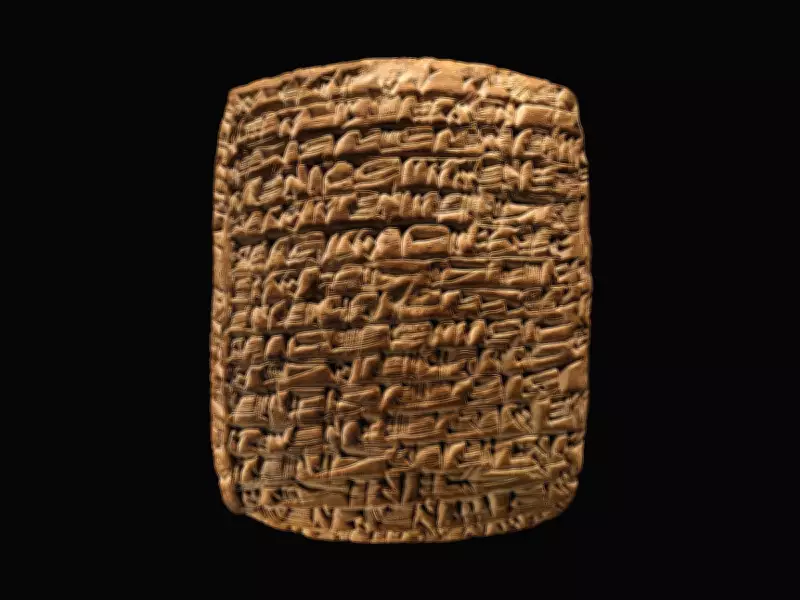
A tiny fingerprint impressed into an ancient clay tablet can bring us closer to the scribe who made it. In the study of ancient writing, clay tablets are usually seen as records of laws, letters, and literary works. When a ridge from an ancient finger is impressed into the clay, the tablet becomes a concrete relic of the person who pressed it with bare fingers long ago. This finding turns an abstract history of writing into something tangible and immediate.
Clay Holds More Than Words
Clay is especially good at preserving traces of human activity. Clay surfaces can even preserve fine ridge lines despite being fired or hardened. This is possible because of clay’s physical properties. Clay that is soft enough to write on can also preserve fingerprints.
Fingerprint preservation on clay is more than a curiosity. A research paper describes using the GelSight Max imaging system to recover fingerprints from hardened clay more accurately than earlier techniques. According to the researchers, fingerprints on clay artifacts had long been studied, but image quality was often too poor for firm conclusions. Better visualization made it possible to analyze ridge details and use fingerprints as evidence of physical contact with clay artifacts.

How One Print Tells a Different Story
A fingerprint on ancient pottery tells us something distinctive about history because it links the handmade object to the person who made it. Researchers in PLOS ONE have used preserved fingerprints on ancient pottery pieces to retrace some of the social history involving labor division, learning, and workshop activities. The significance of these prints does not lie in identifying each print with a specific person. Rather, it is in the process of production and the skills that passed through the ancient society. Each fingerprint found on clay provides some additional information about its manufacture and use.
The same logic applies to writing tablets, where fingerprints reveal more than mere presence on the surface. Ancient tablets were not only media for information exchange; they were also objects made through considerable effort. Each clay tablet was shaped, dried, pressed, and sealed by hand, and fingerprints remind us of that effort.
From Smudges to Measurable Data
A study published in Heritage Science outlines a scientific method for studying ancient touch. The cited npj Heritage Science article focuses on a mobile CT scanner for cuneiform clay envelopes and virtual unwrapping of hidden tablets; it does not discuss photographing fingerprints in high resolution, distinguishing finger from palm prints, or building fingerprint databases. This matters because archaeology often deals with damaged surfaces, where an insignificant smudge can become measurable data with the right tools.
Current research is increasingly focused on using fingerprints as evidence of contact with clay objects. Studying fingerprints on clay objects is becoming an increasingly common part of cultural heritage research.
Why the Discovery Seems Personal
The findings feel personal because early writing was made by hand, not by an impersonal system. Tablets were part of a broader material culture that included seals, envelopes, transport, and handling. An article in Heritage Science about fingerprints on cuneiform letters inside clay envelopes sheds light on this writing process.
What makes fingerprints meaningful is that they combine the ordinary with the unique. Everyone leaves fingerprints behind, but each print forms a unique biological pattern.