Thiruvananthapuram: In a development that signals growing friction between the BJP-led city corporation and the state government, the much-touted AI-powered robotic canal cleaning system, G-Spider, has been shelved by the civic body, barely months after its launch.
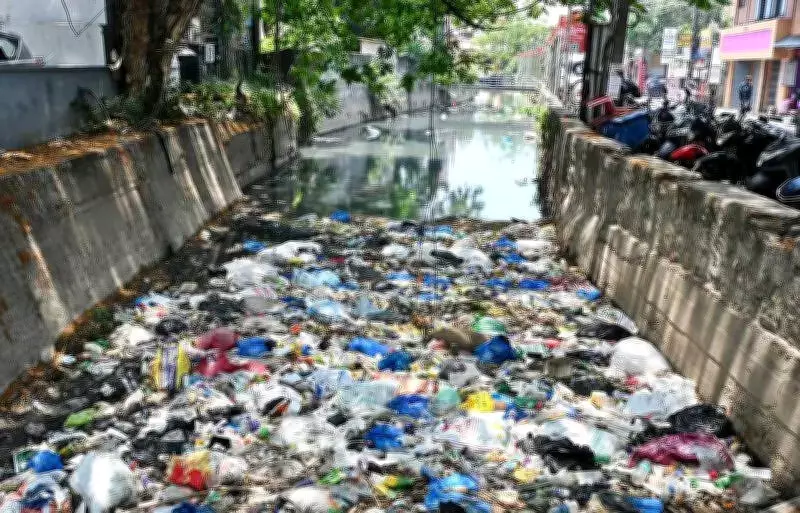
Launched by the Local Self-Government (LSG) department in January as a modern and innovative solution to tackle the heavily polluted Amayizhanjan Canal, the G-Spider robotic system was expected to revolutionise waste removal and improve water flow in one of the city's most neglected waterways. However, the corporation has now deemed the system ineffective for the canal's complex cleaning requirements.
Meanwhile, the civic body has proposed a long-term solution to address the frequent waste dumping. The plan involves covering heavily polluted stretches and densely populated areas with concrete slabs, while incorporating manholes at regular intervals to facilitate periodic cleaning and maintenance. M R Gopan, corporation health standing committee chairperson, told TOI that the robotic system struggled to handle the volume and nature of waste dumped into the canal, which includes plastic, construction debris, silt, and organic matter. According to him, the limitations of the technology became evident during its operation, leading to delays and incomplete cleaning.

"While the idea of deploying advanced technology was promising, it did not deliver the expected results on the ground," Gopan said. "The canal has years of accumulated waste, including heavy and compacted materials. The robotic system could not effectively remove such waste, forcing us to return to conventional methods," he added.
Following this assessment, the corporation resumed manual cleaning operations, deploying earthmovers to clear the canal. Officials claim that the traditional approach proved more effective in removing large volumes of waste within a shorter time frame. An official from the LSG department, however, maintained that the G-Spider project should not be dismissed entirely, suggesting that the technology may still have relevance in less challenging environments.
"Innovative solutions like robotic cleaning systems are part of an effort to modernise waste management. While there may be operational challenges in certain locations, such initiatives should be refined and adapted rather than abandoned," the official said.
The corporation's decision is being viewed in administrative circles as a quiet rebuttal of the state's push for high-tech interventions in urban management. Though no confrontation has surfaced, the divergence in approach reflects differing priorities between the two bodies. However, the civic body's proposal to cover some sections of the canal with concrete slabs may invite criticism, as the irrigation department is also covering the canal using dome fencing. According to Gopan, the maintenance of the canal is vested in the corporation, and hence, the civic body will implement this proposal as a long-term solution to maintain the canal. The concrete slabs are proposed at Old Central Theatre Road, Thakaraparambu, Upidamoodu Bridge side, and Thampanoor. He said the proposal is still in the conceptual stage and will be implemented in phases, considering the financial and logistical challenges involved.
"Covering the canal in densely polluted areas could help prevent waste dumping and improve sanitation. However, it requires careful planning and substantial investment," Gopan added.
However, irrigation department officials were unavailable for comment. Residents living along the canal have long complained about foul odour, mosquito breeding, and health hazards caused by the polluted waterway. While the return to manual cleaning has brought some immediate relief, questions remain about the sustainability of such efforts without a comprehensive waste management strategy.