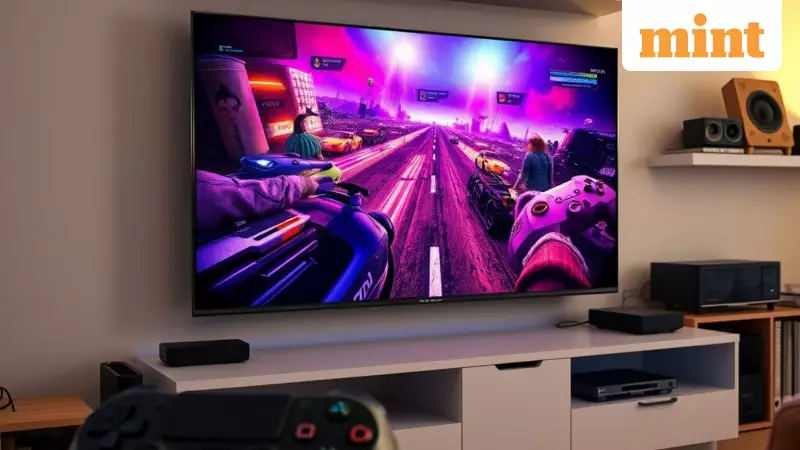
The Big Screen Gaming Revolution: More Than Just Size
For Indian gamers, the living room television has transformed into a central hub for entertainment. While large screens create an immersive experience, the real magic for a seamless gaming session lies beneath the surface. Two technical features, often overlooked, are the true heroes: refresh rate and responsiveness. These elements are critical in determining how smooth your game feels and how quickly it responds to your commands, making all the difference in fast-paced titles.
Understanding Refresh Rate: The Key to Fluid Motion
Refresh rate, measured in Hertz (Hz), is the number of times your TV updates the picture every second. A standard TV operates at 60 Hz. However, modern gaming televisions push this much further, supporting 90 Hz, 120 Hz, and even higher. A higher refresh rate means motion appears incredibly smooth, eliminating the blur and judder common in fast-action sequences.
This is especially vital in competitive games like first-person shooters and racing sims. When the action gets frantic, a high refresh rate keeps the image clear, allowing you to track enemies and navigate tracks with precision. On a large screen, where any visual imperfection is magnified, a high refresh rate is non-negotiable for maintaining sharpness and stability.

The Critical Role of Input Lag and Responsiveness
If refresh rate is about visual smoothness, responsiveness is about control. It boils down to input lag—the tiny delay between pressing a button on your controller and seeing the action on screen. High input lag makes gameplay feel sluggish and disconnected, ruining your timing and accuracy.
Thankfully, most new TVs come with a dedicated Gaming Mode. This mode cuts down processing to prioritize speed, drastically reducing input lag. For online multiplayer or competitive gaming, this feature is a game-changer. It ensures your character moves precisely and your actions feel instantaneous, giving you the confidence to react quickly.
Why Big Screens Demand Better Performance
As television screens get larger, the need for high performance intensifies. Motion blur becomes more obvious, and input delays feel more pronounced because the action fills your entire field of vision. Furthermore, high resolutions like 4K demand more processing power to keep the gameplay fluid at high speeds.
This is why modern gaming TVs combine fast refresh rates, low latency, and powerful processors. Technologies like Variable Refresh Rate (VRR) and Auto Low Latency Mode (ALLM) work together to ensure a stable and tear-free experience, regardless of the game's frame rate.
The Future of Gaming is Tied to Display Technology
As games become more visually complex and faster, the reliance on advanced display features will only grow. Investing in a television with strong performance specs is an investment in longevity. It ensures your setup can handle next-generation consoles and future game releases, providing a smooth, responsive, and visually confident gaming experience for years to come.