China's Groundbreaking Ban on Hidden Car Door Handles
In a landmark decision that could reshape automotive safety standards worldwide, China has announced it will ban "hidden" or retractable car door handles starting from 2027. This move marks the first such prohibition by any country and comes amid growing concerns about the safety risks associated with these sleek, futuristic designs that have become increasingly popular in both electric and conventional vehicles globally.
The Rise and Risks of Flush Door Handles
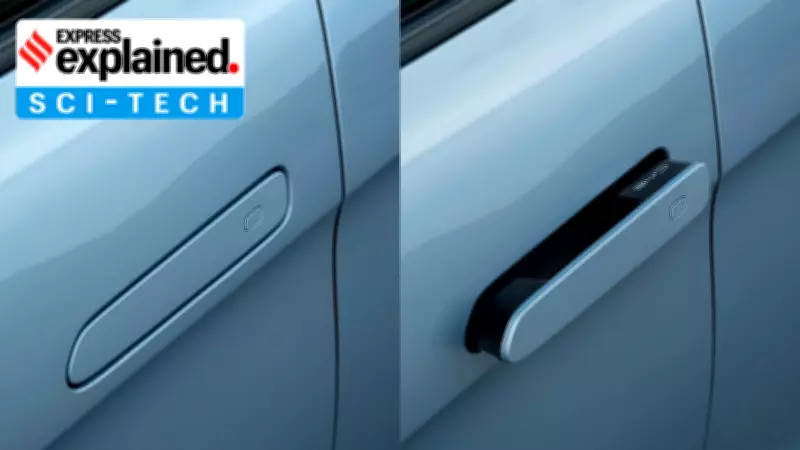
Once celebrated as a symbol of automotive sophistication and modern design, flush door handles sit seamlessly with the car's exterior until activated. These handles, which retract to reduce aerodynamic drag and create a cleaner appearance, gained mainstream popularity largely through Tesla's innovative approach to electric vehicle design. Elon Musk's company made these handles a signature feature, influencing numerous other manufacturers to adopt similar designs.
However, beneath their stylish exterior lies a potentially dangerous flaw. The entire mechanism depends on electronic systems powered by the car battery. When functioning properly, sensors detect the car keys and send commands to make the handles protrude. But in emergency situations—such as car crashes, power failures, or fires—these electronic systems can fail, potentially trapping passengers inside vehicles.

Safety Incidents Prompt Regulatory Action
Chinese authorities have documented multiple cases where passengers became trapped in vehicles following accidents or electrical failures. In one particularly tragic incident in 2024 involving Huawei-backed Aito's M7 SUV, three people including a two-year-old boy died after rescue workers had to break windows to access the vehicle. The company later explained that "the power and signal cables had been immediately severed, preventing the door handle controller from receiving the ejection signal."
Similar incidents have been reported with Xiaomi's SU7 model, highlighting that the problem extends beyond any single manufacturer. Even Tesla, which pioneered this technology, has faced challenges. Elon Musk himself acknowledged in 2013 that "occasionally the sensor would malfunction... So you'd pull on the door handle, and it wouldn't open. Obviously, it's quite vexing for a customer."
Global Implications and Indian Context
China's decision carries significant weight globally, as the country represents both the world's largest automobile market and manufacturing hub. The new regulations mandate that every car must have standard mechanical door releases on both the inside and outside of all doors, ensuring manual operation remains possible even during electronic failures.
This development has particular relevance for India, where several popular models feature hidden door handles. These include Tata's Sierra and Curvv, Kia's Seltos and Syros, and Mahindra's XEV 9e, BE 6 and XUV700. The safety concerns highlighted by China's ban may prompt Indian regulators and manufacturers to reevaluate these designs.
Technical Challenges and Industry Response
The fundamental issue with hidden door handles lies in their dependence on electronic systems. As one Chinese automotive engineer explained to China Daily, "Sensors are often located at the front of the door; if they're damaged in a crash, the handle may not pop out." This vulnerability becomes particularly dangerous when accidents damage batteries or electrical systems, potentially leaving passengers trapped in burning or submerged vehicles.
Even in non-emergency situations, these systems can fail. The U.S. National Highway Traffic Safety Administration has investigated multiple complaints about electronic door handles becoming inoperative. In at least four documented cases, parents had to break car windows to rescue their children from vehicles. The NHTSA noted that "although Tesla vehicles have manual door releases inside of the cabin, in these situations, a child may not be able to access or operate the releases even if the vehicle's driver is aware of them."

The Broader Trend Toward Electronic Systems
This controversy over door handles represents a larger trend in automotive design: the shift from mechanical to electronic systems. While this transition offers benefits like improved aerodynamics and futuristic aesthetics, it also introduces new failure points and safety considerations. The industry is now grappling with how to balance innovation with fundamental safety requirements.
Some manufacturers are already exploring solutions. Tesla's design chief Franz von Holzhausen revealed last year that the company was working to combine electronic and manual door-release mechanisms. Meanwhile, Chinese automaker BYD has rolled out numerous affordable models with advanced "smart driving" features, reflecting how electronic systems continue to proliferate even as their safety implications are being questioned.
Looking Ahead: Safety Versus Style
As China implements its ban and other countries consider similar measures, the automotive industry faces a crucial decision point. Manufacturers must determine whether the aesthetic and aerodynamic benefits of hidden door handles justify their potential safety risks. With approximately 60% of China's top-selling New Energy Vehicles featuring these handles as of April 2025, the transition away from them will require significant design changes across the industry.
The ultimate impact of China's decision will likely extend far beyond its borders, potentially influencing global safety standards and consumer expectations. As vehicles become increasingly electronic and automated, this case serves as an important reminder that even seemingly minor design elements can have life-or-death consequences when safety is compromised for style.