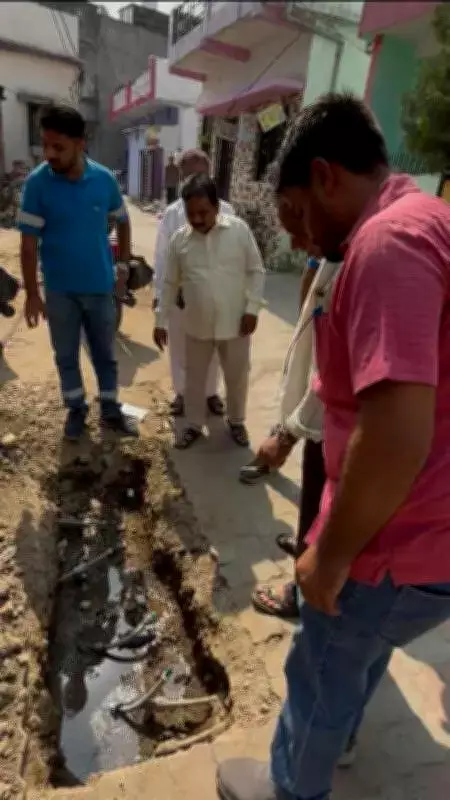
A dangerous combination of illegal water connections, widespread use of pressure pumps, and leaking sewage chambers has plunged large parts of Gittikhadan in Nagpur into a severe water crisis. Residents have been receiving foul, contaminated water supply for over a week, accompanied by collapsing pressure.
Affected Localities
Localities including Telangkhedi, Manavta Nagar, Panchsheel Nagar, Azad Nagar, and Gondtoli are among the worst affected. Residents report that taps are running with water resembling gutter water, and the supply pressure is so poor that even basic storage has become a struggle.
Official Response
Congress corporator Abhijeet Jha, who inspected the area, admitted that a faulty linkage between a newly laid water line and an existing sewer line led to contamination. "There has been a coordination failure. The sewer line got connected to the water line, allowing dirty water to enter the system. We are rectifying it and expect improvement in two to three days," he said.

However, officials concede that the crisis is rooted in deeper systemic failures. The Nagpur Municipal Corporation's public health engineering department has flagged rampant illegal tapping as a key reason behind both contamination and pressure loss. Unauthorised connections have weakened pipelines, creating leak points where sewage seeps into drinking water lines, especially in stretches running parallel to damaged sewer chambers.
Role of Illegal Pressure Pumps
Orange City Water Limited (OCWL) deputy director Praveen Sharan said the situation has worsened due to unchecked use of illegal suction or "tullu" pumps. "Because of lack of police protection and public cooperation, the use of pressure pumps has increased significantly. These pumps disturb the pressure balance across the network, and combined with illegal tapping, they are severely affecting supply," he said.
Sharan added that enforcement teams often face resistance on the ground, making it difficult to act against violators. OCWL has sought police assistance, but officials say manpower constraints and local opposition continue to hinder crackdowns.
Residents' Perspective
Residents say the crisis is not new. While contamination has intensified recently, low-pressure supply has persisted for months. "For two hours of supply, we barely get enough water. Now even that is dirty," a resident said. Sharan clarified that water supply hours in this part of the city have been increased, but rampant usage of pressure pumps is resulting in low-pressure water supply.
Broader Implications
With peak summer this season, the crisis has exposed a complete breakdown of planning, enforcement, and accountability. Unless illegal connections are curbed, sewer leakages are fixed, and strict action is taken against pressure pump misuse, the city's water network risks further collapse, leaving thousands dependent on an increasingly unsafe supply.