Rapido Captain's Unsolicited WhatsApp Messages to Passenger Spark Viral Outrage
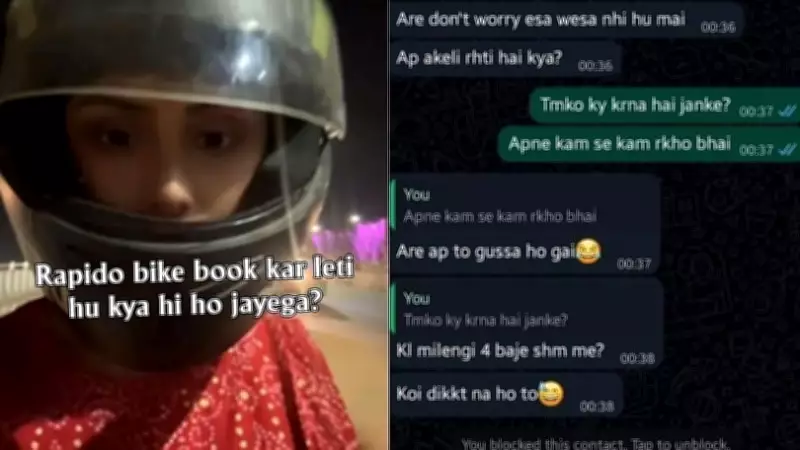
A disturbing incident involving a Rapido bike taxi captain has gone viral on social media, highlighting serious concerns about passenger safety and data privacy. The video, shared by a woman from Ghaziabad, Uttar Pradesh, documents her unsettling experience after using the ride-hailing service.
"What Could Possibly Go Wrong?" Caption Sets Ominous Tone
The viral video carries an overlaid text in Hindi that reads, "Rapido bike book kar leti hu kya hi ho jayega?" which translates to "I'll just book a Rapido bike, what could possibly go wrong?" This caption sets an ominous tone for the footage that follows, capturing a conversation that has alarmed netizens across India.
Unsolicited WhatsApp Messages Follow Completed Ride
According to the video evidence, after the woman completed her Rapido ride, the captain proceeded to send her multiple WhatsApp messages. The messages reportedly included the phrase "Achi lag rahi thi" (You were looking good), which the woman found inappropriate and disturbing. This unsolicited contact occurred despite the ride having concluded, raising questions about how the captain obtained her personal contact information.

The incident has sparked widespread debate about several critical issues:
- Data Privacy Violations: How did the Rapido captain access the passenger's WhatsApp number after the ride concluded?
- Women Safety Protocols: What measures are ride-hailing platforms implementing to protect female passengers?
- Platform Accountability: What responsibility do companies like Rapido bear for their captains' post-ride conduct?
- Emergency Response Systems: Are existing safety features adequate to prevent such incidents?
Social Media Erupts with Safety Concerns
The video, originally shared on Instagram by user @aanu_shka3, has triggered an avalanche of responses from concerned citizens. Many users are sharing their own experiences with ride-hailing services, while others are demanding stricter regulations and better enforcement of existing safety guidelines.
Key questions being raised include:
- Should ride-hailing platforms implement more robust privacy shields between captains and passengers?
- What immediate actions should companies take when such incidents are reported?
- How can passengers better protect their personal information when using these services?
- What role should local authorities play in regulating ride-hailing platforms?
Broader Implications for India's Ride-Hailing Industry
This incident comes at a time when India's ride-hailing industry is experiencing significant growth, with millions of daily users relying on services like Rapido, Ola, and Uber for transportation. The viral video has amplified existing concerns about passenger safety, particularly for women traveling alone during odd hours or in unfamiliar areas.
The timing is particularly noteworthy as the video was reportedly recorded and shared on April 21, 2026, suggesting these issues remain unresolved despite years of industry development and regulatory discussions. The location in Ghaziabad, a major city in the National Capital Region, adds to the urgency as urban centers typically have higher concentrations of ride-hailing users.
Industry experts note that while most ride-hailing interactions proceed without incident, even isolated cases like this can significantly erode public trust. The incident serves as a stark reminder that technological convenience must be balanced with robust safety measures and ethical data handling practices.
As the video continues to circulate across social media platforms, pressure is mounting on Rapido and similar companies to address these safety gaps transparently and implement concrete improvements to protect all passengers, particularly vulnerable groups who rely on these services for daily mobility.