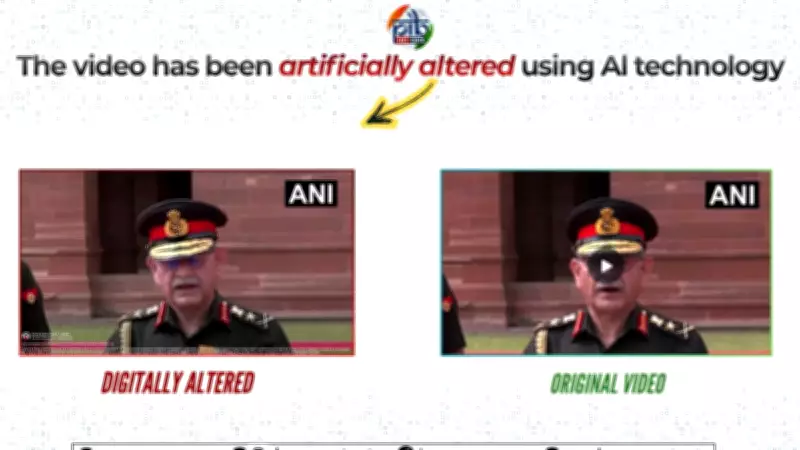
The Press Information Bureau (PIB) has debunked a viral video purportedly showing Indian Army Chief General Upendra Dwivedi making inflammatory remarks against Pakistan. The video, which has been circulating on social media platforms, was found to be a manipulated deepfake created using artificial intelligence (AI) tools.
Doctored Video Linked to Disinformation Campaign
According to the PIB Fact Check Unit, the fake video was part of a coordinated disinformation campaign aimed at creating tension between India and Pakistan. The unit clarified that the original video was from an earlier event where General Dwivedi spoke on routine military matters, not on cross-border relations.
“The video in circulation is fake and has been doctored using AI technology. The original video has been taken out of context and altered to spread misinformation,” the PIB stated in a tweet.

How the Fake Video Was Created
Fact-checkers at PIB analyzed the video frame by frame and identified multiple anomalies. The lip movements of General Dwivedi did not match the audio, and the background audio had inconsistencies. AI-generated voice cloning was used to simulate the general’s speech, while the original visuals were retained.
The PIB urged the public not to share the video and to report any such content to their fact-checking portal. “We request citizens to verify any suspicious content before sharing. Misinformation can harm national security and public order,” the advisory read.
Impact and Response
The fake video gained traction on platforms like WhatsApp and Twitter, with some users expressing anger and calling for action against Pakistan. The Indian Army has also condemned the circulation of the doctored video and stated that it takes a serious view of such attempts to malign the institution.
“The Indian Army upholds the highest standards of professionalism and does not make provocative statements. This fake video is an attempt to undermine the credibility of the armed forces,” an Army spokesperson said.
Cybersecurity experts noted that this incident highlights the growing threat of AI-generated deepfakes in spreading disinformation. “Deepfakes are becoming increasingly sophisticated and difficult to detect. It is crucial for the public to be media literate and rely on official sources for news,” said a researcher from the Cyber Peace Foundation.
Previous Instances of Fake News Involving Military Leaders
This is not the first time fake videos or statements have been attributed to Indian military leaders. In 2024, a similar deepfake video of a former Army chief surfaced, which was also debunked by PIB. The government has been actively working to counter disinformation through the PIB Fact Check Unit and other initiatives.
The PIB Fact Check Unit was established in 2019 to verify news related to government policies and schemes. Over the years, it has expanded its scope to include fact-checking of viral content that could impact national security and public safety.
How to Identify Deepfake Videos
Experts advise looking for signs such as unnatural blinking, mismatched audio, and blurring around the mouth area. Tools like the PIB Fact Check portal and other fact-checking websites can help verify content. The public is encouraged to check the source of the video and look for official statements from government agencies before sharing.
The PIB reiterated that the only authentic source of information regarding the Indian Army is the official social media handles and website of the Army and the Ministry of Defence.