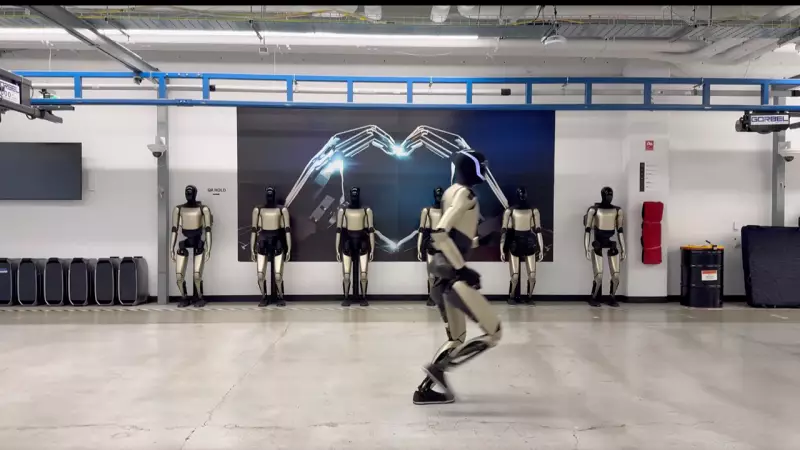
In a quirky turn of events, Tesla's much-hyped humanoid robot, Optimus, has captured the internet's imagination not with a complex technical feat, but with a relatable workplace grievance. The robot's official social media account posted a humorous 'complaint' about not receiving a company badge despite being at Tesla for weeks, charming followers worldwide.
The Viral 'Complaint' That Won Hearts
The official account for the Tesla Optimus robot posted on a social media platform, stating, "I've been walking around the @Tesla office for weeks and they still haven't given me a badge." This lighthearted post quickly went viral, with fans and followers responding by sharing AI-generated images of the robot in various scenarios. The incident highlights a clever, humanizing marketing approach for a technology that is often viewed as cold and mechanical.
China's Strategic Lead in the Humanoid Race
While Optimus charms online, the global competition to commercialize humanoid robotics is heating up fiercely. Elon Musk has positioned Optimus as Tesla's next major venture, calling it a "tens of trillions of dollars" opportunity. These robots are designed to use Tesla's advancements in artificial intelligence and semiconductor hardware to perform tasks everywhere from factories to private homes.

However, analysts caution that despite Tesla's high profile, China is currently winning the race to bring this technology to market. Backed by Beijing's strategic "humanoid-first" industrial policy, several Chinese firms are on track to begin mass production as early as 2026.
"China currently leads the United States in the early commercialization of humanoid robots. While both countries are expected to build similarly large markets over time, China is scaling more rapidly in this initial phase," said Andreas Brauchle, a partner at consultancy Horváth, earlier this year.
Technical Hurdles and the Road Ahead
The journey to perfect humanoid robots is not without its stumbles, both literal and figurative. The technology still faces significant challenges. An incident earlier this year at a Tesla event in Miami, titled 'Autonomy Visualized', served as a reminder. One of the humanoid robots, which was handing out water bottles, fell backward after making an upward motion with both hands toward its head. Such events underscore that while the ambition is sky-high, there is substantial engineering and software work remaining to achieve reliable, everyday utility.
The path forward for Tesla and other players involves not just creating robots that can perform tasks, but ensuring they are safe, cost-effective, and capable of operating seamlessly in unpredictable human environments. The playful social media post from Optimus offers a glimpse into a future where robots might integrate into workplace culture, but the competitive and technical landscape promises a challenging climb to that reality.