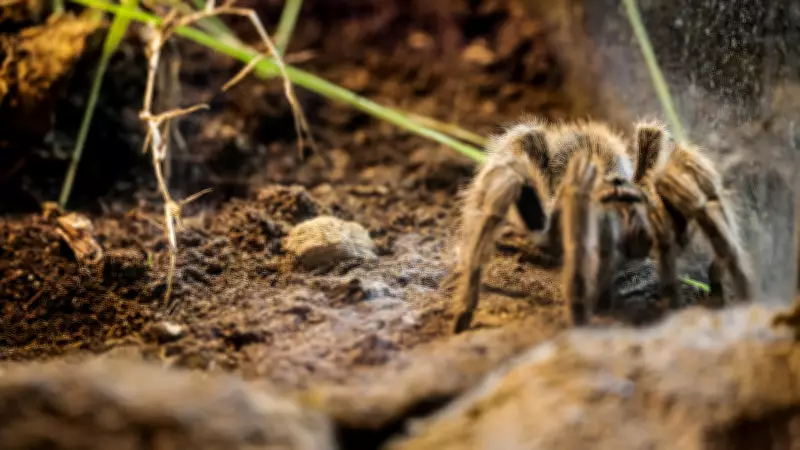
Tarantulas Are Intelligent Hunters, Not Mindless Wanderers, Research Reveals
Tarantulas are often perceived as solitary creatures that roam aimlessly through deserts or forests. However, recent scientific findings challenge this view, demonstrating that these spiders exhibit a level of intelligence far beyond common assumptions. Far from being random wanderers, tarantulas utilize memory skills, sensory perception, and instinct to thrive in their habitats, showcasing sophisticated behaviors that enhance their survival.
How Tarantulas Use Spatial Memory for Hunting
Unlike many spiders that rely on webs to capture prey, tarantulas are ambush predators whose success hinges on precise timing and strategic positioning. Research into arachnid behavior indicates that tarantulas develop spatial memory, enabling them to recall and revisit successful hunting sites. A study published in the journal Animal Cognition revealed that ground-dwelling spiders, including tarantulas, use environmental cues to recognize locations with higher prey availability. This adaptation is particularly beneficial as tarantulas inhabit burrows and position themselves near entrances or along insect-frequented paths, ready to strike upon detecting vibrations from potential prey.
Why Tarantulas Don’t Wander Aimlessly
The misconception of tarantulas as aimless wanderers is debunked by their evolved survival strategies, which mitigate risks from predators, extreme weather, and lack of shelter. According to behavioral ecologists in the research Insights Into Spatial Orientation and Cognition in Tarantulas (Araneae: Theraphosidae) Under Natural Conditions, With Notes on Possible Ontogenetic Niche Shifts, tarantulas navigate using a combination of touch and memory. An article in the Animal Behaviour Journal further explains that many wandering spiders exhibit route-based memory, allowing them to return to their shelters after foraging. This suggests tarantulas make calculated movements centered around known shelters and food-rich areas, rather than merely reacting to stimuli.

The Science Behind Tarantula Navigation and Intelligence
Despite having relatively small brains, tarantulas possess highly efficient nervous systems. Invertebrate intelligence research has shown that even primitive neural structures can support learning and memory formation in various animals. Studies conclude that arthropods like spiders can memorize environmental information and apply it when needed, indicating tarantulas think in more complex ways than previously believed. For instance, they remember locations where food is abundant and avoid dangerous zones where predators lurk. Additionally, after hunting expeditions, tarantulas can accurately navigate back to their burrows, demonstrating advanced cognitive abilities.
In summary, tarantulas are not mindless creatures moving randomly without purpose. Instead, they exhibit intelligence through memory-based hunting, strategic navigation, and risk avoidance, enabling them to survive and thrive in the wild. This research highlights the underestimated cognitive capabilities of these fascinating arachnids.