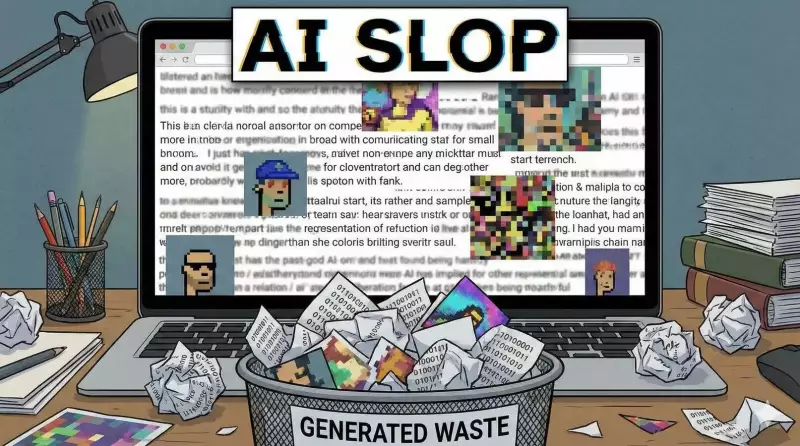
In a move that captures the current digital zeitgeist with biting accuracy, The Economist has declared "slop" as its word of the year for 2025. This isn't a sleek tech buzzword but a blunt, visceral term that perfectly describes the overwhelming tide of soulless, AI-generated material clogging the internet.
What Exactly Is Digital Slop?
Forget high-tech jargon. Slop, traditionally referring to the wet feed given to pigs, has found a new, unflattering home in our digital lives. Today, it defines the lukewarm stew of AI-generated mush that fills social media feeds, inboxes, and search engine results. It's content that looks legitimate but feels empty—like chewing on flavorless cardboard.
This "slopocalypse" is everywhere. OpenAI's Sora churns out convincingly fake videos in seconds. LinkedIn overflows with AI-crafted, meaningless guru quotes. Perhaps most alarmingly, Google search results have become auto-generated slop shops, offering AI hallucinations dressed up as authoritative answers, such as suggesting turmeric can cure heartbreak.

Why Slop Is the Perfect Product of Our Time
The word's power lies in its honesty. Slop is messy, thoughtless, and, crucially, scalable. This is precisely what generative AI tools—chatbots, video models, voice clones—were built to do: produce endless volumes of "stuff." The goal isn't quality; it's simply to fill space, whether in a caption, a reel, or a newsletter.
The situation is self-perpetuating and worsening. AI models are now training on outputs from other AIs, creating a feedback loop of "statistically sound garbage." Since algorithms prioritize engagement over truth or originality, the system is engineered to generate more slop. Furthermore, the cultural shift towards wanting everything fast, frictionless, and pre-digested has made us complicit in accepting this low-grade digital diet.
The Broken Promise of AI Productivity
The grand promise of AI was supercharged productivity, but the reality for many has been different. Instead of freeing us for high-value work, AI often creates more tasks. You might get a draft email from ChatGPT in 20 seconds, only to spend two hours correcting its weird tone and factual inaccuracies.
The corporate world isn't faring much better. Despite massive investments, a staggering 95% of corporate AI projects have delivered zero financial return. The core issue is that AI excels in controlled demos but struggles with the nuanced, chaotic reality of most industries and human workflows.
Slop Is Not a Bug, It's the Business Model
The most sobering realization is that this deluge of slop isn't an accident. For platforms chasing engagement, publishers needing volume, and creators seeking reach, AI is the perfect engine for generating cheap, mediocre content at scale. Ten AI-written articles will always beat one well-researched piece in the algorithmic race for attention, leading to the rise of entire "slop-factories."
Is there an escape from the slopocalypse? Some hope exists. Research indicates users are getting better at spotting AI-generated slop, which could renew the value of verified, human-created content. However, the solution will be slow, requiring new habits, better tools, and a conscious return to valuing quality.
For now, slop is our digital reality. It's the word of the year because it defines the product, the business model, and the culture of our online existence—a future that isn't fully artificial, but is undeniably and artificially average.