Sea Anemones Unlock Secrets of Human Evolution, Pushing Body Plan Origins Back 600 Million Years
The ocean continues to guard profound mysteries, with even the most unassuming organisms offering groundbreaking insights into the origins of life. For decades, researchers have theorized that complex animals, including humans, evolved through a slow, incremental process spanning hundreds of millions of years. However, the precise emergence of the fundamental blueprint for constructing a human-like body has remained elusive. A new study now proposes that this blueprint may have existed in a creature vastly different from us: the sea anemone.
Simple Creatures, Complex Clues: The Sea Anemone Connection
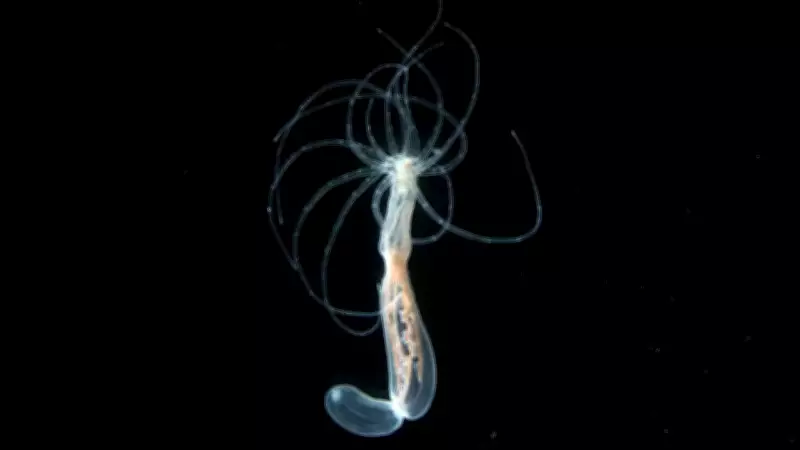
Sea anemones are soft, brainless marine animals that attach to rocks on the seafloor, belonging to the cnidarian group alongside jellyfish and corals. Their bodies are typically arranged in a radial pattern around a central point, with tentacles extending outward. In stark contrast, humans are bilaterians, characterized by distinct left-right symmetry and front-back orientation, evident in features like two arms, two legs, and paired eyes. Biologists have long considered cnidarians and bilaterians as separate branches of the animal kingdom.
Recent research from the University of Vienna, as detailed in a ScienceDaily report titled '600-million-year-old body blueprint found in sea anemones', challenges this view. Scientists have uncovered evidence that sea anemones employ a developmental mechanism remarkably similar to that used by bilaterian animals during early growth. If validated, this finding could push the origins of our body plan much deeper into evolutionary history than previously imagined.

The Molecular Machinery Behind Body Development
Building an organism from an embryo is a highly orchestrated process, guided by molecular signals that instruct cells on their position and fate. Key players in this system are bone morphogenetic proteins (BMPs), which act as messengers directing tissue formation for skin, organs, and the nervous system. The strength of BMP signals varies across the developing body, creating a gradient that influences structure: lower levels aid in forming the central nervous system, moderate levels contribute to organs like kidneys, and higher levels shape outer tissues.
Chordin and BMP Shuttling: An Ancient Evolutionary Mechanism
The Vienna team focused on a regulator molecule called Chordin, which controls BMP signals by blocking them in some areas and transporting them to others—a process known as "BMP shuttling." This shuttling helps establish the gradient crucial for body shaping during development. Intriguingly, this mechanism appears in diverse, distantly related species such as frogs and flies, though not in fish, suggesting it may be an ancient evolutionary trait.
The breakthrough came when researchers observed that sea anemones utilize a similar Chordin-based system to shape their body axis. This implies that BMP shuttling might predate the evolutionary split between cnidarians and bilaterians, potentially dating back over 600 million years. The discovery hints at a shared ancestral mechanism that laid the groundwork for complex body plans across the animal kingdom.
Implications for Evolutionary Science
This research not only redefines our understanding of early animal evolution but also highlights the interconnectedness of life forms. By studying simple creatures like sea anemones, scientists can trace the deep roots of developmental processes that eventually gave rise to humans. As exploration continues, such findings remind us that the secrets of our own existence may lie hidden in the ocean's depths, waiting to be uncovered by curious minds.