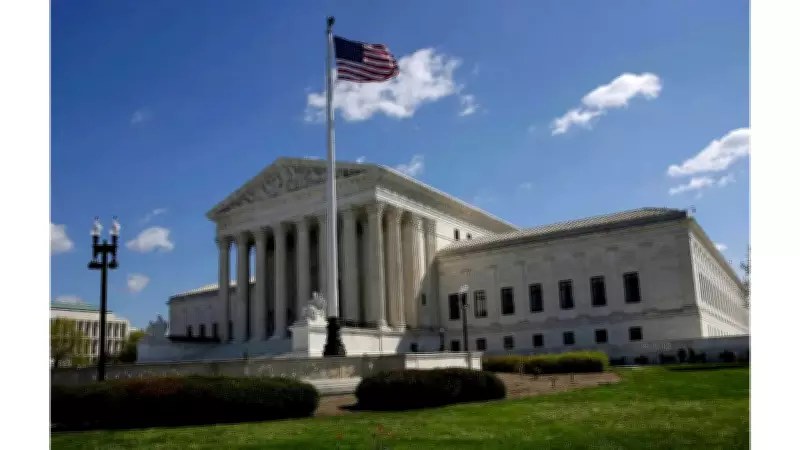
The Supreme Court of the United States is set to revisit how constitutional protections apply to modern surveillance tools, prompted by a 2019 bank robbery in Richmond, Virginia. The court will examine whether geofence warrants violate the Fourth Amendment's ban on unreasonable searches.
Background of the Case
According to a report by Fortune, the case centers on Okello Chatrie, whose cellphone location data placed him near the scene of a robbery at Call Federal Credit Union. Investigators used a geofence warrant served on Google to identify devices present in the area at the time of the crime. That data ultimately led police to Chatrie, who had taken $195,000 and initially evaded capture.
Understanding Geofence Warrants
Unlike traditional warrants, which start with known suspects, geofence warrants begin with a location and work backward. Police ask tech companies for anonymized location data to identify devices within a specific area at a specific time, then narrow it down to a list of potential suspects. This method has helped prosecutors crack cases where there is little traditional evidence, such as surveillance footage. Such warrants have been used in investigations into the Jan. 6 Capitol riot and in cases of violent crimes crossing state lines.

However, civil liberties groups have raised concerns that such warrants sweep in data from individuals with no connection to the crime. Legal scholars told the court that allowing the practice could "unleash a much broader wave of similar reverse searches."
Key Legal Questions
At the heart of the case is whether individuals have a reasonable expectation of privacy over their location data when it is shared with third parties, such as Google. Prosecutors argue that Chatrie voluntarily enabled location tracking, while his lawyers contend that collecting data from multiple users without suspicion violates privacy.
Conflicting Lower Court Rulings
A federal judge initially ruled that the search violated Chatrie's rights but allowed the evidence, noting that the officer acted in good faith. A federal appeals court in Richmond later upheld the conviction, while another appeals court in New Orleans ruled separately that geofence warrants "are general warrants categorically prohibited by the Fourth Amendment."
Academic Perspectives
An academic group, the Policing Project at New York University School of Law, urged the court to avoid an all-or-nothing approach. It warned that allowing unrestricted use of such tools could operate "with no judicial supervision or constitutional safeguards," while a total ban could limit "legitimate law enforcement activities."
Details of the Robbery
In Chatrie's case, the geofence warrant revived an investigation that had stalled. After linking his device to the area, police obtained a separate warrant to search his home, where they found nearly $100,000 in cash, including bills tied to the bank. Chatrie later pleaded guilty and was sentenced to almost 12 years in prison. Arguing on appeal, his lawyers said that the geofence warrant evidence should not have been used.
SCOTUS and Digital Privacy
The SCOTUS order aligns the case with prior rulings on digital privacy. In 2018, the court ruled 5-4 in favor of a defendant whose movements were tracked by mobile tower data without a warrant, raising concerns about long-term digital surveillance. In that decision, Chief Justice John Roberts spoke of "seismic shifts in digital technology" and referred to "the exhaustive chronicle of location information casually collected by wireless carriers today."
The case will be argued before the Supreme Court this week, and the decision could define how law enforcement agencies use location-based data and the limits of privacy in the age of cell phones constantly recording detailed records of user movements.