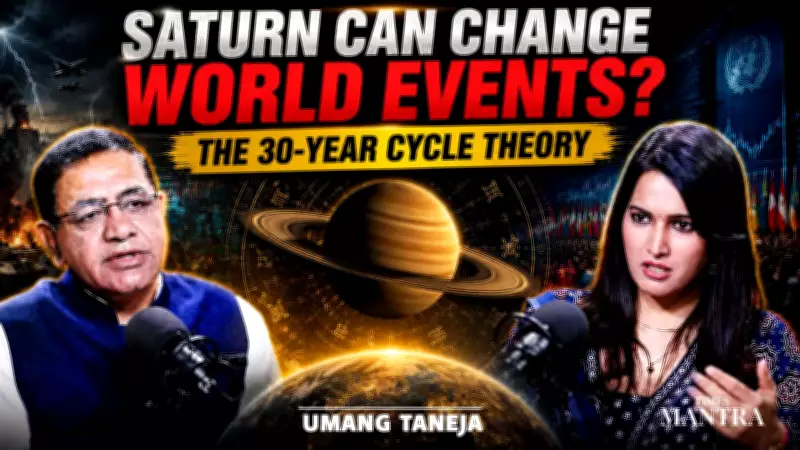
Can Saturn’s powerful 30-year cycle really influence major global events and historical shifts? In a fascinating discussion, astrologer Umang Taneja explains the astrology theory that connects Saturn’s movement with periods of transformation, instability, and world-changing events. Why do certain global patterns appear to repeat every few decades? Could planetary cycles have a deeper connection with politics, economies, conflicts, and collective human behavior?
The Saturn Cycle and Historical Patterns
Saturn takes approximately 30 years to complete its orbit around the Sun, spending about 2.5 years in each zodiac sign. This cycle has long been associated with major societal shifts. Taneja points out that many significant historical events—such as economic depressions, wars, and political revolutions—have coincided with key Saturn transits. For example, the Great Depression of the 1930s, World War II, and the fall of the Berlin Wall all occurred during periods when Saturn was making pivotal aspects in the sky.
Vedic Astrology Perspective
In Vedic astrology, Saturn is known as Shani and is considered a karmic planet. Its movements are believed to bring lessons, discipline, and sometimes hardship. The 30-year cycle is seen as a time for collective karma to play out. Taneja explains that when Saturn returns to its original position in the sky—a phenomenon known as Saturn return—individuals and societies face a reckoning. This can manifest as economic downturns, social unrest, or breakthroughs in consciousness.

Global Transformation and Collective Behavior
The conversation delves into how Saturn’s influence might shape global economies and political landscapes. Taneja suggests that Saturn’s transit through specific signs correlates with periods of austerity, restructuring, and long-term planning. For instance, when Saturn was in Capricorn (2008–2010), the world experienced a severe financial crisis. Similarly, its transit through Libra (2015–2017) coincided with diplomatic tensions and shifts in international alliances.
Hidden Patterns Behind Major Events
Taneja argues that history is not random but follows cyclical patterns influenced by planetary movements. By studying Saturn’s 30-year cycle, one can identify recurring themes in world history. He cites examples such as the rise and fall of empires, economic booms and busts, and periods of technological innovation. These patterns, he says, offer a deeper understanding of human behavior on a collective scale.
Spiritual Interpretations
Beyond material effects, Saturn’s cycle is also linked to spiritual growth. Taneja explains that Saturn’s energy encourages introspection, responsibility, and maturity. On a global level, this can translate into societal movements toward sustainability, ethical governance, and cultural renaissance. He emphasizes that while Saturn brings challenges, it also provides opportunities for profound transformation.
Conclusion: A Perspective Worth Exploring
This episode of Times Mantra offers a thought-provoking perspective on the connection between planetary cycles and world events. Whether one is a skeptic or a believer, the patterns observed by astrologers like Umang Taneja invite reflection on the hidden rhythms of history. Watch the full discussion for more mind-opening insights into Saturn astrology, Vedic wisdom, and the cyclical nature of time.