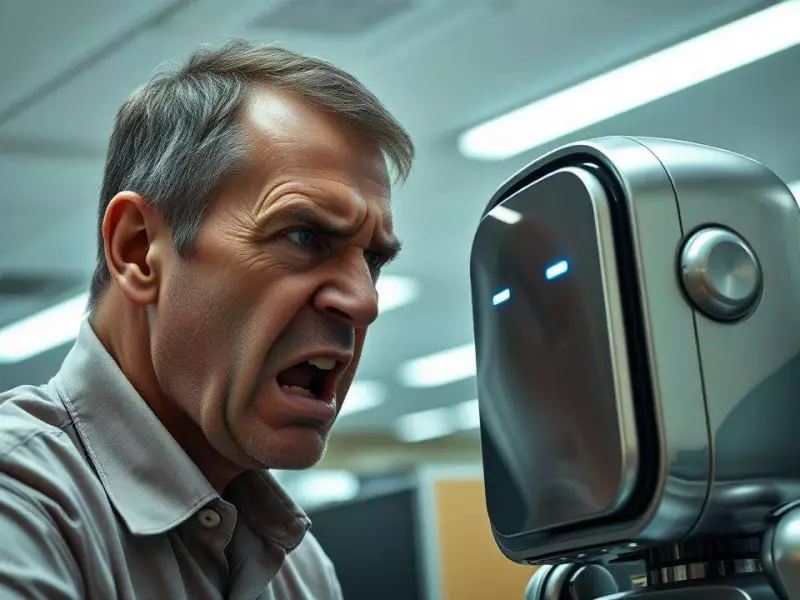
In a stark warning that challenges the multi-billion dollar race to build human-like machines, renowned roboticist Rodney Brooks has labelled the vision of humanoid robots as universal helpers "pure fantasy thinking". The co-founder of iRobot, the company behind the Roomba vacuum cleaner, has issued a sobering critique of the current hype, directly contradicting optimistic projections from figures like Tesla CEO Elon Musk.
The Biological Barrier of Human Touch
In a detailed blog post highlighted by Fortune, Brooks argues that the primary obstacle for today's robots is not intelligence, but a fundamental biological limitation: dexterity. He explains that the human hand is an engineering marvel, equipped with approximately 17,000 low-threshold mechanoreceptors that sense light touch, with density increasing towards the fingertips. This complex sensory system allows for the nuanced manipulation that robots currently cannot replicate.
Brooks points out that while artificial intelligence has made leaps in speech and image recognition by learning from massive datasets, sensing touch cannot be learned the same way. "We do not have such a tradition for touch data," he wrote. He believes that despite the hundreds of millions or even billions of dollars being invested by venture capitalists and tech giants, today's humanoid platforms will not achieve true dexterity through current training paradigms.

Flawed Training Methods: The Video Data Problem
The roboticist specifically targeted the training methodologies used by companies like Tesla and Figure AI. These firms often use videos of humans performing tasks to train their robots' neural networks. Brooks asserts that this approach is fundamentally incapable of teaching physical dexterity. "Video training method incapable of teaching touch," he emphasized.
He offered an alternative path for the industry's massive funding. "If the big tech companies and the VCs throwing their money at large-scale humanoid training spent only 20% as much but gave it all to university researchers, I tend to think they would get closer to their goals more quickly," Brooks stated, advocating for a more research-focused distribution of capital.
A Future on Wheels, Not Two Legs
Brooks directly contradicted Elon Musk's prediction that Tesla would start selling its Optimus humanoid robots by 2026. He presented a radically different vision for the successful robots of the next 15 years. He predicts they will not look like people but will more likely feature wheels for mobility, multiple arms, and possibly five-fingered hands for specific tasks. The industry, he suggests, may still market them as "humanoid" for appeal.
His forecast for the current wave of bipedal robots is grim. "A lot of money will have disappeared, spent on trying to squeeze performance, any performance, from today’s humanoid robots. But those robots will be long gone and mostly conveniently forgotten," he predicted. This serves as a cautionary note for investors pouring billions into what he sees as a technologically premature field.
The critique from a figure of Brooks's stature adds a significant dose of reality to a sector captivated by visions of robotic butlers and assistants. It underscores the vast gap between simulating intelligence in software and replicating the intricate, sensor-rich physicality of the human body.