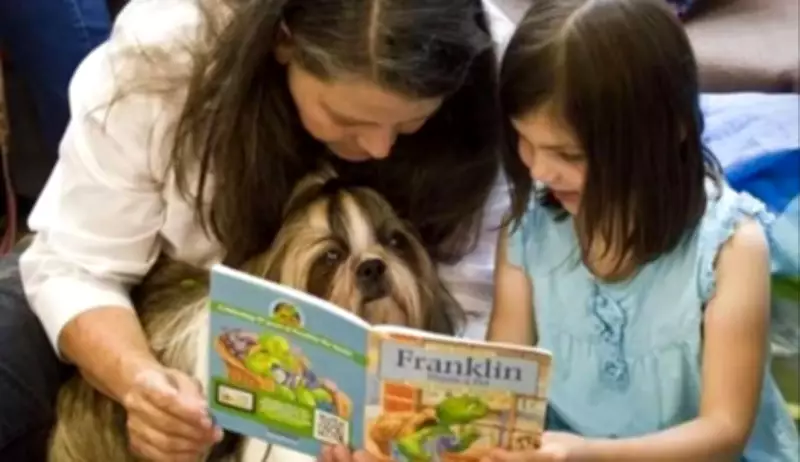
For many parents, getting a child to sit down with a book can feel like an uphill battle. Screens are more tempting, attention spans are shorter, and reading can quickly start to feel like a chore rather than something to look forward to. Apps, reward charts, and stricter routines are often the go-to solutions, but according to education experts, the answer could be far simpler than that. It could, in fact, be curled up on the sofa with a furry friend. Read on as we reveal the surprisingly effective trick that is helping children rediscover the joy of reading and explain the thinking behind why it works so well.
Why Reading Aloud Can Feel Intimidating
For many children, reading aloud is one of the more nerve-wracking parts of learning. Whether in a classroom setting or simply in front of a parent at home, the experience of reading out loud comes with a layer of pressure that silent reading does not carry. In an interview with the Times of India, David Smith, CEO of LA-based Silicon Valley High School, an innovative and AI-powered online institution dedicated to making learning more accessible and engaging, shared, "Children are acutely aware when they're being evaluated. When a grown-up is listening, they notice every stumble, every hesitation. That self-consciousness can make reading feel stressful rather than enjoyable, which is the last thing we want."
Mispronouncing a word, losing their place, or reading too slowly can feel embarrassing, and for some children, that fear of getting it wrong is enough to put them off books altogether. The result is a reluctance to practice, which, of course, only makes progress harder.

The Simple Trick: Reading to a Pet
The solution that Smith recommended is refreshingly low-effort: encourage your child to read to the family pet. Whether it is a dog, a cat, a rabbit, or even a goldfish, the idea is the same. The child reads aloud to an animal that listens without judgment, without interrupting, and without correcting a single mispronounced word. "There's something magical about the way a dog will sit and listen to a child read," said Smith. "The pet isn't going to laugh, sigh, or look disappointed. It just listens, and for a child who finds reading stressful, that kind of audience can be transformative."
According to a recent 2026 study published in Early Childhood Education Journal, "Children participating in animal-assisted reading programs demonstrated significantly reduced reading anxiety and improved reading fluency compared to traditional read-aloud settings." This directly validates the "reading to a pet" technique, confirming lower anxiety and better fluency. It also supports the idea that non-judgmental listeners improve reading engagement.
How Reading Aloud to a Pet Builds Confidence
When children read to pets regularly, they tend to read for longer, read more expressively, and over time, become noticeably more fluent. Since the pressure is off, children focus on the story rather than their performance. They slow down, take their time, and engage with what they're reading. That relaxed state is exactly the kind of environment in which confidence grows. A 2026 study in the Journal of Educational Psychology found that "perceived evaluation by adults significantly increases performance anxiety in children, often reducing reading accuracy, confidence, and willingness to engage in reading aloud tasks." This backs the claim that children feel judged when reading aloud, explains why reading in front of adults can feel stressful and intimidating, and supports the need for low-pressure reading environments.
"Reading confidence is built through repetition and positive experience," Smith explained. "When a child associates reading with something they enjoy, like spending time with a pet they love, they're far more likely to pick up a book again tomorrow."

Why Reading Aloud to a Pet Works
The reasoning behind this trick is rooted in how children learn best: in low-stakes, emotionally comfortable environments. Animals, particularly dogs, are naturally calming. Spending time with pets can lower cortisol levels and reduce feelings of anxiety, and that calmer state of mind carries over into the activity the child is doing at the time. "There is a sense of purpose that comes with reading to a pet," said Smith. "The child is practicing and doing something for their animal. That small shift in framing, from performing a task to sharing a story, can make all the difference."
What to Do If You Don't Have a Pet
The good news for families without a pet is that the principle transfers easily. A favorite stuffed toy works just as well for younger children, who are often more than happy to read to a beloved teddy or soft animal. A younger sibling can serve a similar role, provided they are young enough not to interrupt or correct. Some children respond well to the idea of an imaginary audience, and parents can help set the scene by encouraging their child to "teach" a toy something from the book they have just read. "The core of this trick isn't really about animals at all," said Smith. "It's about removing the fear of judgment. Whatever helps your child feel safe and relaxed while they read, that's the thing worth pursuing."
A 2026 study in Frontiers in Psychology established that "learning environments perceived as emotionally safe and non-evaluative are associated with increased engagement, persistence, and skill acquisition in children." This reinforces why reading improves in calm, pressure-free settings, supports confidence building through relaxed practice, and explains why children read longer and more willingly in such environments.
Conclusion
Helping children enjoy reading does not always require big interventions or elaborate systems. Sometimes, it is about changing the emotional environment around the activity itself. David Smith pointed out, "A child who feels watched or judged will spend more energy worrying about getting it right than actually engaging with the story. But give that same child a relaxed, pressure-free audience, even a silent, furry one, and something changes." By turning reading into a shared, calm experience, parents can help children build real confidence over time. The skills follow naturally from there, and perhaps most importantly, children begin to see reading as something they want to do, rather than something they have to do. For many families, that simple change in approach can make all the difference.