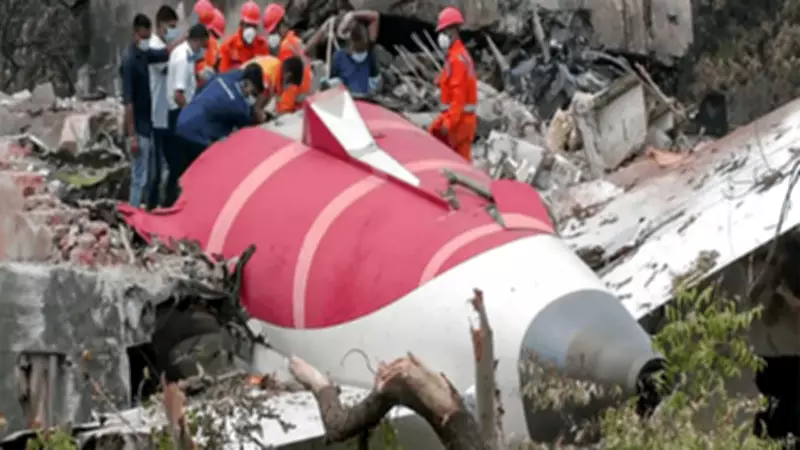
The Federation of Indian Pilots (FIP) has presented a detailed technical hypothesis to Indian authorities, suggesting an electrical failure mechanism that could explain the June 12, 2025 crash of an Air India Boeing 787 at Ahmedabad, which claimed 241 lives. This development could significantly impact the ongoing investigation.
Technical Letter Submitted to Authorities
The FIP has addressed a letter, backed by documentary evidence, to the Prime Minister's Office, Ministry of Civil Aviation, Directorate General of Civil Aviation, and the Aircraft Accident Investigation Bureau. The letter urges that the proposed hypothesis be formally tested by IIT Bombay, the Aeronautical Development Agency, or Hindustan Aeronautics Limited before any final conclusion is reached on the crash cause.
Basis of the Hypothesis
The submission relies entirely on Boeing's own technical manuals, a relay manufacturer's datasheet, and safety investigation reports from American and Japanese aviation authorities following a 2013 Boeing 787 battery fire. The FIP emphasized that media reports have suggested pilot action, including a suicide theory, but International Civil Aviation Organisation Annex 13 requires all credible technical causes to be ruled out first.

"This technical note suggests a credible cause," the FIP letter stated, stressing that the sequence of events should be treated as a testable hypothesis.
Proposed Failure Sequence
The FIP proposes that a lithium-ion battery failure occurred internally during the take-off roll, similar to incidents documented in 2013 with Japan Airlines at Boston and Takamatsu. Such a failure would discharge enormous current through the aircraft's metal structure, raising the voltage of the ground reference and creating electrical disturbances interpreted as power loss.
The aircraft's Battery Power Control Unit would then automatically deploy the Ram Air Turbine (RAT), an emergency windmill that supplies power. This deployment is critical, as it places the aircraft in Standby Operating Mode, closing two contactors that connect the commander's and co-pilot's instrument buses through a shared return path. Through this bridged circuit, voltage disturbances reach the fuel control relays of both engines.
Relay Mechanism
The relays in question are electrical switches that remain in their last set position until moved. The FIP identified the exact make and model used in Boeing 787s, and the manufacturer's instructions warn that voltage running through the switch in the wrong direction can flip it. A battery fault can create such reverse voltage, flipping the switches from 'RUN' to 'CUT OFF', slamming shut the fuel valves and starving both engines simultaneously.
The FIP letter concludes that this sequence represents a credible technical cause that must be investigated before ruling out other possibilities.