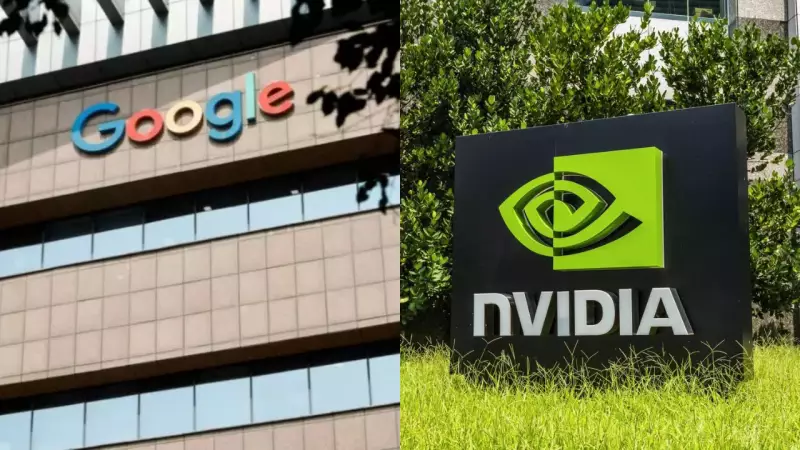
In a bold statement, chipmaking titan Nvidia has brushed aside mounting concerns over Google's growing ambitions in the artificial intelligence hardware arena. This comes amid explosive reports that tech behemoth Meta Platforms is in advanced talks to potentially spend billions on Google's custom-designed chips, a move that sent shockwaves through the investor community.
Nvidia's Confident Stance Amid Market Jitters
Addressing the speculation head-on, Nvidia took to social media platform X to assert its dominant position. The company declared it remains "a generation ahead of the industry" and emphasized its platform is the only one capable of running every AI model across all computing environments. In a conciliatory yet confident note, Nvidia added it is "delighted by Google's success" in AI and confirmed it continues to be a supplier to the search giant.
This public reassurance followed a detailed report from The Information, which revealed that Meta is negotiating with Google to potentially use its custom Tensor Processing Units (TPUs). These chips could power Meta's data centers, marking a significant strategic pivot. The news had an immediate financial impact, with Nvidia's share price falling more than 3% as investors digested the potential implications.

The Stakes: Meta's Massive $72 Billion AI Budget
The potential deal carries enormous weight because Meta stands as one of Nvidia's largest customers. The social media giant has earmarked a staggering $72 billion for AI infrastructure spending this year alone. For Google to capture even a portion of this colossal budget would represent a seismic shift in the balance of power within the AI hardware market, which Nvidia has long dominated with its Graphics Processing Units (GPUs).
According to the report, Meta could begin renting TPUs from Google Cloud as early as 2025, with purchases for its own data centers potentially commencing in 2027. This move would also signal a major expansion for Google, pushing its TPU technology beyond its own internal data centers and into direct competition for the hundreds of billions of dollars being spent globally on AI processors.
Google's Full-Stack Advantage and Wall Street's Watchful Eye
When approached for comment, Google reiterated its commitment to a dual-chip strategy. A company spokesperson stated they are experiencing accelerating demand for both their custom TPUs and Nvidia's GPUs and are committed to supporting both. Google's position in the AI race has strengthened recently with the well-received launch of its Gemini 3 AI model. The company benefits from a unique "full-stack" advantage, controlling the entire ecosystem from foundational AI research to cloud infrastructure.
The escalating rivalry between Nvidia and Google unfolds during a volatile period for the chipmaker's stock. While Nvidia recently reported blockbuster third-quarter earnings that temporarily soothed fears of an AI bubble, linguing doubts about long-term competition have resurfaced. Wall Street is closely monitoring how these shifting dynamics between the two tech titans will reshape the lucrative and critical AI hardware landscape, with Meta's spending plans serving as a key battleground.