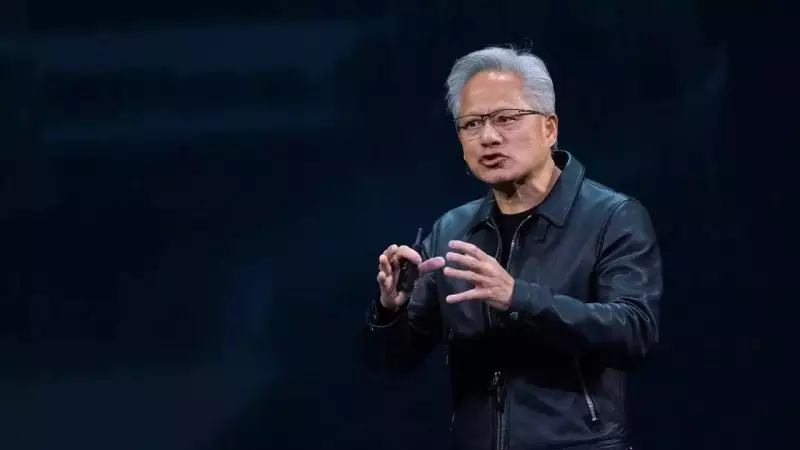
Nvidia CEO Jensen Huang has a clear vision for his engineering teams. He wants them to spend exactly zero percent of their time writing code. This bold statement came during his recent appearance on the No Priors AI podcast.
The Cursor Revolution at Nvidia
Huang revealed that every engineer at the $3 trillion chipmaker now uses Cursor throughout their workday. Cursor is an AI coding assistant that helps automate programming tasks. The CEO's goal is straightforward. He wants to free engineers from what he calls 'syntax' so they can focus entirely on finding and solving problems that haven't been cracked yet.
"Nothing would give me more joy than if none of our engineers were coding at all," Huang said during the podcast. "And they were just purely solving undiscovered problems."

Purpose vs Task: Huang's Framework
This isn't just philosophical thinking. Huang has been promoting a framework he calls 'Purpose vs Task' across multiple interviews in recent months. This includes his viral appearance on The Joe Rogan Experience. The idea is simple but powerful.
Coding represents the task. Discovering and solving novel problems represents the purpose. Huang believes AI should handle the former so humans can concentrate on the latter.
Radiology as Proof Concept
Huang points to radiology as evidence that this approach creates jobs rather than eliminates them. Years ago, AI pioneer Geoffrey Hinton predicted radiologists would become obsolete within five years. He believed computers could scan medical images faster than humans.
Instead, radiologist numbers have actually grown. Huang argues this happened because reading scans was always just a task. The real purpose is diagnosing disease and improving patient outcomes. When AI took over the routine work, demand for human expertise behind it expanded.
Internal Pushback and Response
At Nvidia's recent all-hands meeting, Huang reportedly pushed back hard against managers. These managers were telling teams to dial back AI usage. According to Business Insider, Huang responded with "Are you insane?" He promised employees they would still have work to do—just more ambitious work.
Critics Warn of 'Vibe Coding' Dangers
Not everyone shares Huang's unbridled optimism about AI coding assistants. Michael Truell, CEO of Cursor itself, recently cautioned against what he calls 'vibe coding.' This is where developers let AI build software without properly reviewing the output.
"If you close your eyes and don't look at the code and have AIs build things with shaky foundations, things start to kind of crumble," Truell told Fortune's Brainstorm AI conference.
Even AI Pioneers Express Caution
Andrej Karpathy, the former Tesla AI director who coined the term 'vibe coding,' admitted his recent Nanochat project was "basically entirely hand-written." He explained that AI agents "just didn't work well enough" for that particular project.
Karpathy recently warned fellow programmers about the rapid changes in their profession. "I've never felt this much behind. The profession is being dramatically refactored," he said.
The Future of Software Engineering
For now, Huang is betting big that humans who focus on purpose rather than tasks will come out ahead. He believes engineers should leverage AI tools to handle routine coding while they tackle higher-level challenges.
Whether this bet pays off for the millions of developers who actually write code for a living remains the undiscovered problem. The software engineering profession is clearly undergoing significant transformation as AI tools become more sophisticated and integrated into daily workflows.
The debate continues between those who see AI as liberating engineers from mundane tasks and those who worry about over-reliance on automated systems. What's clear is that companies like Nvidia are leading the charge toward redefining what engineering work looks like in the age of artificial intelligence.