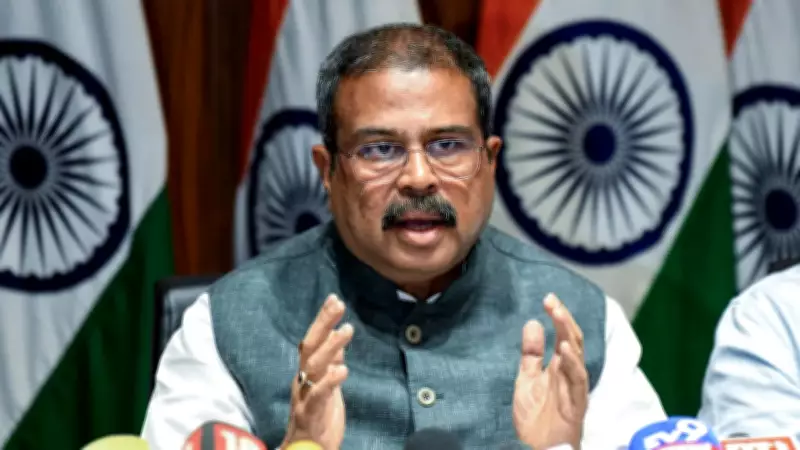
NEW DELHI: Amid continuing scrutiny over the NEET-UG 2026 paper leak controversy, the National Testing Agency (NTA) on Tuesday announced a series of institutional, technological and administrative reforms while union education minister Dharmendra Pradhan chaired a high-level review meeting to assess preparations for the forthcoming NEET (UG) re-examination and tighten security arrangements across states.
The reforms come weeks after the cancellation of the May 3 NEET-UG examination following allegations that parts of the question paper had been leaked before the test. The controversy revived concerns over examination security after earlier irregularities linked to NEET in 2024, including paper leak allegations, grace marks disputes, suspicious perfect scores and claims of organised malpractice networks operating across multiple states.
NTA said it had initiated measures to strengthen its leadership team, institutional capacity and oversight mechanisms in line with recommendations of the high-level expert committee headed by former ISRO chief K Radhakrishnan.

As part of the restructuring, four senior officers, including two joint secretary-level officers designated as additional director generals, have been posted to the agency to improve administrative oversight and operational monitoring. The NTA has also advertised three specialist leadership posts — chief technology officer (CTO), chief finance officer (CFO) and general manager (human resources) — aimed at modernising examination systems, institutional governance and internal accountability structures.
According to the agency, the proposed CTO will oversee the full digital examination ecosystem, including confidential question paper management, AI-driven integrity controls, biometric and facial authentication systems, cyber-security safeguards and anomaly analytics designed to detect suspicious patterns during examinations.
The agency said broader reforms would include structural changes in question paper preparation, translation, printing and logistics, along with technology-enabled safeguards at every stage. It also proposed continuous monitoring systems, stronger audit frameworks, professional training, enhanced stakeholder coordination and improved grievance redressal mechanisms for students and parents.
During Tuesday’s review meeting, Pradhan stressed that all gaps identified in the earlier examination process must be comprehensively addressed and eliminated. He directed officials to ensure the re-examination was conducted in a secure, seamless and foolproof manner under stringent protocols. The minister also instructed authorities to hold coordination meetings with district magistrates and superintendents of police across states to strengthen monitoring, maintain vigilance at centres and ensure adequate arrangements, transportation support, medical assistance and student facilitation systems for candidates appearing in the examination nationwide over the coming weeks. Officials were also asked to ensure uninterrupted power supply, secure storage facilities for examination materials and rapid-response teams for emergencies.
Expert Committee Recommendations
The high-level expert committee, led by former ISRO chairman K Radhakrishnan, submitted a set of recommendations that the NTA has begun implementing. These include enhancing the digital infrastructure for exam delivery, strengthening encryption protocols for question paper transmission, and establishing a dedicated cybersecurity unit to prevent future breaches. The committee also suggested periodic audits of examination centers and stricter background checks for personnel involved in exam conduct.
Technological Upgrades
Key technological upgrades include the deployment of AI-based proctoring systems for online exams, real-time monitoring of exam centers through CCTV feeds, and the use of blockchain technology to secure question paper distribution. The NTA is also exploring the integration of facial recognition and fingerprint scanning at entry points to prevent impersonation. Anomaly detection algorithms will be employed to flag unusual patterns in candidate behavior or response times, enabling swift intervention.

Administrative Measures
On the administrative front, the NTA has appointed four senior officers to oversee operations, including two joint secretary-level officials as additional director generals. The new leadership will focus on improving coordination with state authorities and ensuring compliance with security protocols. The recruitment of a CTO, CFO, and GM (HR) is expected to bring specialized expertise in technology, finance, and human resources to the agency.
Union Education Minister Dharmendra Pradhan, during the review meeting, emphasized the need for zero tolerance towards malpractices. He directed officials to conduct surprise inspections at exam centers and establish rapid response teams to handle emergencies. The minister also stressed the importance of student welfare, asking for medical facilities, transportation, and grievance redressal mechanisms to be in place at all centers.
The NTA has assured that the re-examination will be conducted with the highest standards of security and transparency. Candidates and parents have been urged to cooperate with the new measures to ensure a fair and smooth process.