NASA Launches Global Hunt for Martian Kitchen Innovators
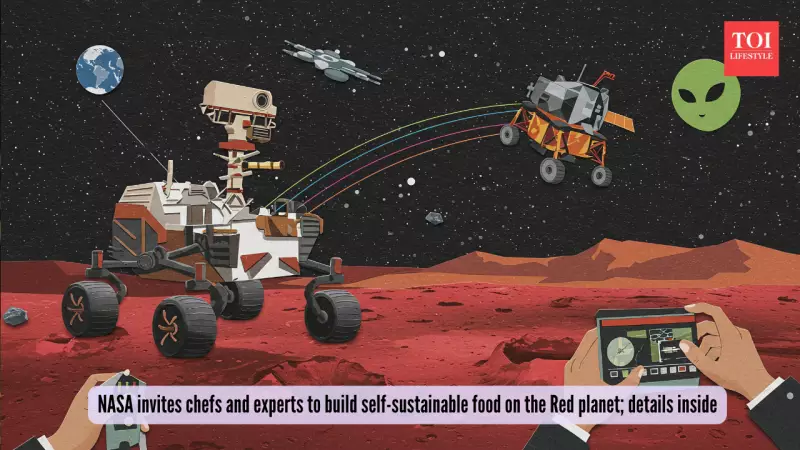
NASA continues its ambitious missions to Mars with a persistent question driving exploration. For years, scientists have asked whether life can exist on the Red Planet. Now, the space agency shifts focus to a more immediate human need. The success of future Mars missions depends not only on advanced rockets and sturdy habitats. It requires something far more fundamental. Astronauts need nutritious and tasty meals after exhausting days in an alien environment.
From Sci-Fi Rations to Sustainable Cuisine
NASA recently issued an exciting call to innovators worldwide. This initiative completely transforms how we approach long-duration space missions. The agency moves beyond traditional pre-packaged space food. Instead, it challenges participants to create self-sustaining kitchens capable of remarkable feats. These systems must transform basic Martian resources into delicious and nutrient-rich dishes.
The kitchens would utilize local materials available on Mars. They would process Martian soil, recycle air from habitats, and purify available water. The goal is producing complete meals that sustain crew health and morale during extended missions.

The Deep Space Food Challenge Explained
NASA officially launched the "Deep Space Food Challenge: Mars to Table" competition. This global contest features an impressive $750,000 prize pool. That amount converts to approximately 6.75 crore Indian rupees. The challenge seeks innovative ideas for complete food systems designed specifically for Mars missions.
Participants must develop comprehensive setups that handle every aspect of food production. These systems need to grow ingredients, process them into meals, and serve nutritious food within Martian habitats. Crucially, they must operate independently without regular resupply from Earth.
This requirement distinguishes Mars missions from shorter journeys like the Artemis II Moon mission. While lunar missions can rely on pre-packed foods, Mars expeditions present different challenges. The three-year journey covering millions of kilometers demands true self-sufficiency. Crews cannot depend on shipments from our home planet.
Who Can Participate and What's Required
NASA specifically invites chefs, students, and citizen scientists to join this groundbreaking challenge. The competition welcomes creative thinkers from all backgrounds and professions. Participants must design systems that address multiple technical considerations.
Successful designs must manage thermodynamics in the Martian environment. They need to ensure optimal nutrient density in all produced foods. Systems must also handle waste efficiently while integrating seamlessly with NASA's existing life-support technology.
According to NASA's official guidelines, participants face a clear requirement. They must create "a complete meal plan for a crew on Mars, along with concepts for food systems." This comprehensive approach ensures practical solutions for future astronauts.
Transforming Space Food History
Space food has evolved significantly from its early days. Past missions featured unappetizing tubes containing mushy substances. Mars missions demand a revolutionary upgrade. Future astronauts need gourmet meals created from recycled resources.
Proposed systems aim to transform recycled water and air into culinary experiences. These meals would maintain crew fitness and motivation during long Martian nights. The registration period for this exciting challenge remains open until July 31, 2026.
Earth Benefits from Martian Innovation
Technologies developed for Mars missions promise practical applications on Earth. These innovations could help grow crops in challenging environments worldwide. Potential uses include Antarctic research stations and arid regions like parts of India.
Such advancements would contribute significantly to global food security. NASA runs this challenge in collaboration with the Methuselah Foundation. The competition concludes in September 2026 after teams build and test their prototypes.

The Deep Space Food Challenge represents more than cosmic cooking experimentation. It provides a blueprint for surviving isolation in extreme environments. The initiative uses advanced technology to solve everyday hunger challenges. With a substantial prize attracting global talent, this contest turns science fiction into practical dinner plates.