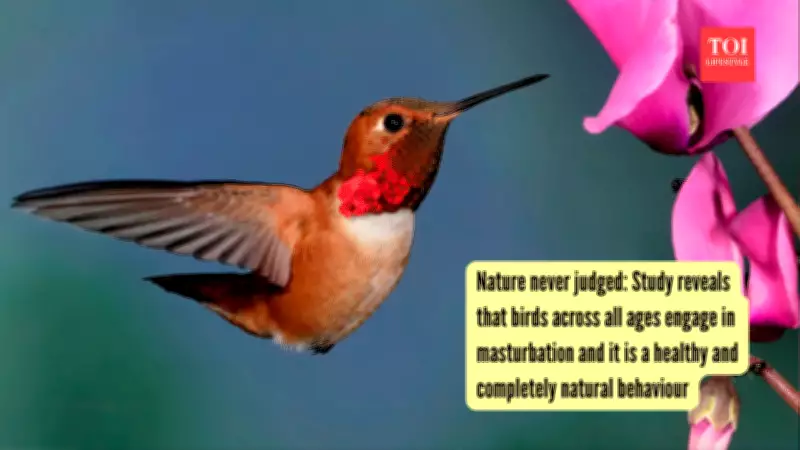
In our society, masturbation is often surrounded by shame, awkward conversations, and outdated stigmas. We are taught it is something to hide, something bad or abnormal. But nature may have quietly proved us wrong all along. Surprisingly, many organisms across species, from dolphins to primates, from penguins to marine iguanas, have been engaging in self-pleasure for millions of years, without guilt, judgment, or human social taboos.
A recent study revealed that masturbation in birds is not only real but also widely prevalent, natural, and healthy. The study, published in Ecology and Evolution and led by Dr. Chloe Heys from the University of Lancashire, along with researchers from Oxford, Swansea, and Liverpool universities, challenges long-held assumptions about animal behavior.
What Does the Study Say?
For decades, scientists and bird keepers assumed that when captive birds like parrots masturbated, it was a sign of stress or loneliness caused by confinement. The study has found something different altogether: that masturbation is a completely natural and healthy part of their sexual behavior repertoire, according to Dr. Heys, an evolutionary ecologist at the University of Lancashire in Preston.

The research considered data from scientific literature, as well as observations from bird keepers and breeders through surveys and online communities. They discovered that masturbation actually occurs across a wide range of bird species and among males as well as females. While 55 percent of recorded cases involved males, 36 percent involved females.
Age of the Birds Does Not Matter
Another surprising discovery is that juvenile birds were almost as likely as adults to engage in masturbation, which means that this behavior is not limited to sexually mature individuals. Our significant discovery is that masturbation is not an adverse reaction to captivity, stated Dr. Heys. This means young birds are not confused or stressed; they are simply behaving naturally.
Wild Birds Masturbate More
While it is widely believed that higher stress levels increase the frequency of masturbation, and in the case of birds, the stress of captivity theory, it was noted that it is actually more common in wild birds than captive ones. The survey indicated that avian masturbation is widespread among various species, including parrots, turkeys, and chickens, and is more prevalent in their natural habitats than in captivity. Additionally, it is more common in parent-reared birds rather than hand-reared captive birds, meaning that it is a natural behavior for many species.
The Behavior Is Common in Species with Multiple Mates
Dr. Matilda Brindle, an evolutionary biologist at the University of Oxford and co-author of the study, said the study across many of these species suggests that non-reproductive sexual behaviors are common throughout the animal kingdom. The team found a clear link between the likelihood of masturbation in a bird species and its mating system. Masturbation was more common in species that have multiple mates than in monogamous species or those that stick to one partner for a long duration.
Masturbation has previously been documented in dolphins, marine iguanas, Cape ground squirrels, horses, penguins, and several primates, including chimpanzees, gibbons, and Japanese macaques.