Lenskart Employs AI for Eye Tests as Optometrist Shortage Bites
India's eyewear market faces a critical bottleneck. The rapid growth of companies like Lenskart has outpaced the availability of trained optometrists. This shortage presents a major hurdle for expansion across India, Southeast Asia, and West Asia.
Lenskart has openly acknowledged this challenge. In its regulatory filings, the company highlighted the difficulty in finding and retaining qualified eye care professionals. This problem intensifies as Lenskart pushes into new, underserved markets.
AI Steps Into the Testing Room
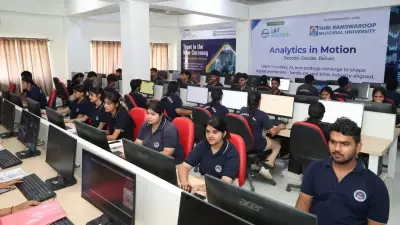
The company's solution involves a significant technological shift. Lenskart is deploying artificial intelligence for remote eye testing in more than 500 stores. This model centralizes optometrists who connect to stores via video links and specialized AI diagnostic tools.

"Technology allows a single optometrist to conduct far more eye tests than in a traditional store," explained a company operations source. "It multiplies the impact of scarce talent."
Lenskart expects this AI-enabled system to become the standard foundation for eye care delivery. The data supports this shift. In the first half of FY26, the company conducted 9.3 million eye tests in India, exceeding the total for all of FY24. Remote testing drove this 47% annual growth.
Efficiency Gains and Operational Changes
The new system brings tangible benefits. AI has reduced average in-store wait times for eye tests from 19.5 minutes to 15.8 minutes. Lenskart also offers home eye tests in major cities, promising completion within 60 minutes.
High-volume or complex locations will still have on-site optometrists. However, new and lower-volume stores are now designed from the start for remote testing. On-site professionals will play a complementary role in dense, high-complexity areas.
In contrast, competitor Titan Eye+ continues to rely on traditional in-store testing by optometrists, promoting a "20-step zero-error" process performed by trained staff.
Experts Voice Clinical Concerns
Health professionals express serious reservations about this retail-driven model. They argue that optometry involves more than just prescribing glasses.
"The eye allows direct observation of blood vessels," said Dr. Rajeev Prasad of the Indian Optometry Association. "Specialists can detect early signs of diabetes or thyroid disorders. The core value lies in preventive care and early detection."
Experts warn that scaling AI and remote tools as substitutes risks eroding clinical judgment. This could compromise care for complex cases involving children, elderly patients, or those with diabetes or glaucoma risks.
Dr. Prasad notes a structural issue: "Corporates are incentivized to sell eyewear, not invest in preventive eye care in high-throughput retail settings."
Underlying Labor Market Issues
The optometrist shortage masks deeper problems. India produces 6,000–7,000 bachelor-level optometrists yearly, yet many face unemployment or underemployment. The Indian Optometry Association attributes this gap to low pay scales.
Three Lenskart optometrists revealed they hold diplomas and earn between ₹20,000 and ₹25,000 monthly. "Large chains disproportionately hire diploma holders," Dr. Prasad observed. "This creates uneven care quality and accountability gaps that consumers cannot easily spot."
Policy uncertainty worsens the situation. India's optometry education remains fragmented, with courses ranging from one-year diplomas to PhDs. Frequent curriculum revisions have failed to establish clear professional recognition or career paths, reducing student intake over time.
Liability and the Future of Eye Care
The shift to technology-driven systems complicates liability. While licensed clinicians remain responsible for prescriptions, liability now also extends to the technology architects managing AI data quality, according to legal experts.
"This model doesn't solve the optometrist shortage; it lets companies scale around it," said policy researcher Sohom Banerjee. He describes the change as "the centralization of clinical judgment with AI-enabled augmentation, not just automation."

Banerjee cautions that scale multiplies both efficiency and the consequences of failure. Centralized remote testing transforms eye care into a data-driven platform business. Human expertise is increasingly repositioned toward oversight rather than routine care delivery.
Lenskart has not publicly detailed how it defines or handles clinically complex cases within its remote models. The company did not respond to queries before publication time.