India Receives Invitation to Join US-Led Pax Silica Initiative
The United States has extended a formal invitation to India for full membership in Pax Silica. This Washington-led strategic initiative aims to strengthen global supply chains for silicon and critical minerals essential for artificial intelligence development. US Ambassador to India Sergio Gor made the announcement on Monday, stating that India would receive the invitation next month.
Understanding the Pax Silica Framework
Pax Silica represents the US government's effort to identify trusted partner nations for collaboration in artificial intelligence advancement and silicon supply chain security. The term combines Latin and scientific elements—'Pax' meaning peace and 'Silica' referring to the compound refined into silicon, the fundamental material in semiconductor chips.
The initiative builds upon previous US-led efforts including the 2022 Mineral Security Partnership and the more recent Quad Critical Minerals Initiative. These agreements reflect Washington's growing focus on aligning technology, critical minerals, and geopolitical strategy amid intensifying competition with China.

Participating Nations and Their Contributions
The current Pax Silica grouping includes several key nations:
- United States
- Japan
- Republic of Korea
- Singapore
- Netherlands
- Israel
- United Arab Emirates
- United Kingdom
- Australia
Each participating country brings distinct strengths across multiple domains. These range from critical mineral resources and advanced manufacturing capabilities to semiconductor expertise and AI innovation ecosystems. The US government emphasizes that together, these nations host the most important companies and investors powering the global AI supply chain.
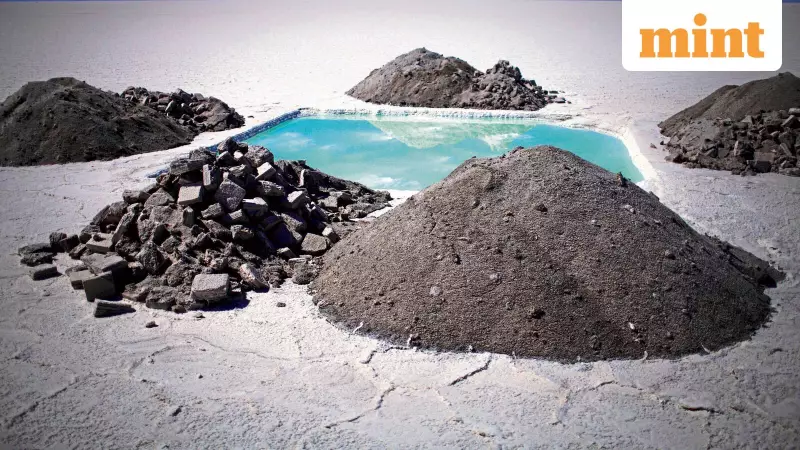
Notable corporations within this network include Sony, Hitachi, Fujitsu, Samsung, SK Hynix, Temasek, DeepMind, MGX, Rio Tinto, and ASML. Australia's inclusion demonstrates the initiative's logic particularly well—the country served as the world's largest lithium producer in 2023, accounting for approximately half of global supply for this battery-critical mineral.
Strategic Significance for India
For India, participation in Pax Silica would represent a significant strategic achievement. It signals the country's growing importance in shaping future supply chains that underpin artificial intelligence and advanced computing technologies. S. Krishnan, Secretary in the Ministry of Electronics and Information Technology, emphasized this point during a recent Delhi event.
"From a strategic point of view, it's important that India be at the high table on these important issues," Krishnan stated. "Fundamentally, it's about addressing the supply chains for critical minerals and materials. It's important for a country like India to be part of that. I think it's a recognition, again, of the trust."
India's existing policy initiatives align closely with Pax Silica's objectives. The India AI Mission, approved in 2024 with a ₹10,372 crore five-year outlay, seeks to democratize artificial intelligence, support startups, and build foundational models for Indian languages. The India Semiconductor Mission represents an even larger commitment, with a ₹76,000 crore corpus allocated in 2021 to position the country as a chipmaking hub.
The country's technology services scale further strengthens its case for inclusion. India hosts more than 2,975 global capability centers—the world's largest concentration of such facilities. These centers employed nearly 1.9 million professionals as of FY24. Recent major investments, including Microsoft's $17.5 billion commitment to AI and cloud infrastructure development from 2026 to 2029, underscore India's growing technological importance.
Geopolitical Context and China's Role
Pax Silica reflects the increasing convergence of economic and strategic partnerships. Sankalp Gurjar, a geopolitics professor at Pune's Gokhale Institute of Politics and Economics, notes that "the technical difference between strategic and economic partnerships or compacts has narrowed over the past few years, with economic policy being weaponized and supply chains becoming critical infrastructure."

The initiative emerges as both India and the United States seek to reduce dependence on China, which dominates several critical supply chains. China currently mines approximately 60% of the world's rare earth raw materials and refines about 90% into magnets. Recent export restrictions on rare earth magnets—essential for defense, electronics, renewable energy, and electric vehicles—have created global industry concerns.
In response, India announced support for domestic magnet manufacturing with a ₹7,280 crore seven-year outlay. Gurjar suggests that within Pax Silica, India could leverage its substantial market scale and deep integration into the global technology ecosystem. The country provides a significant market for new technologies while hosting operations from many of the world's largest multinational corporations.
The Pax Silica initiative operates on a fundamental premise articulated by the US government: "economic security is national security, and national security is economic security." This perspective recognizes that technology, computing capabilities, and the minerals enabling them will shape economic and strategic power throughout the twenty-first century.