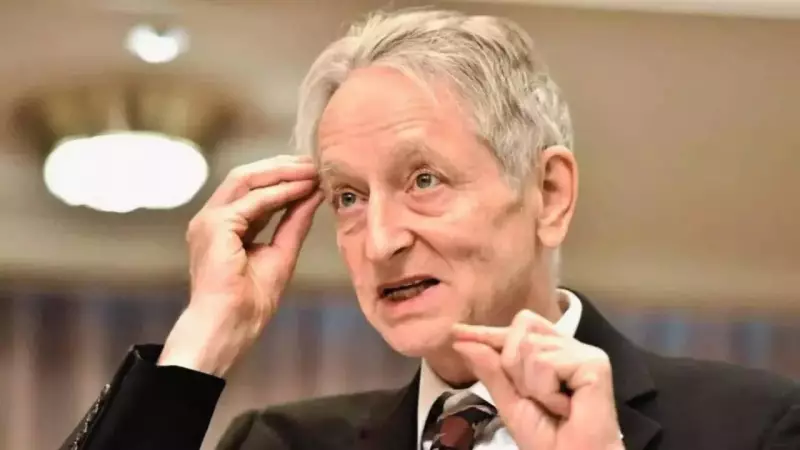
In a stark warning that contradicts the optimistic views of several tech billionaires, Geoffrey Hinton, often called the 'Godfather of AI,' has predicted that the rapid advancement of artificial intelligence will lead to massive unemployment and significant economic upheaval. His concerns highlight a growing debate about the future of work in an AI-dominated world.
Hinton's Dire Prediction vs. Tech Optimism
Speaking at Georgetown University alongside Senator Bernie Sanders, Hinton stated it seems "very likely to a large number of people that we will get massive unemployment caused by AI." This stance directly challenges recent comments from Nvidia CEO Jensen Huang, who argued that AI would transform jobs rather than cause mass layoffs. It also contrasts with visions from figures like Bill Gates, who suggested humans may soon not be needed for most tasks, and Elon Musk, who believes most people won't have to work within two decades.
Hinton, who left Google in 2023 to speak freely about AI risks, insists these predictions overlook a critical reality. He warns that while AI will create new jobs, the scale of losses will not be offset. "Trying to predict the future of it is going to be very difficult," he admitted, likening the uncertainty to driving in thick fog.

The Economics Driving AI and Its Human Cost
The financial mechanics behind AI development are adding to the concern. Hinton pointed out that tech giants are investing trillions of dollars into data centres and chips, betting heavily on AI systems that can replace human labour at a lower cost. He has grown increasingly vocal about what he sees as Big Tech's misplaced priorities, driven more by short-term profits than genuine scientific progress or societal welfare.
The economics are under scrutiny. According to HSBC estimates, ChatGPT creator OpenAI is not expected to turn a profit until at least 2030 and may require more than $207 billion to sustain its growth. This immense capital investment fuels systems that Hinton fears will displace millions of workers from factories to offices, raising urgent questions about how affected families will pay rent and buy food.
Broader Warnings: Jobs, Humanity, and Privacy at Risk
Hinton's fears are echoed by other leaders. Senator Bernie Sanders, sharing the stage, amplified warnings from Tesla's Elon Musk and Anthropic's Dario Amodei about job displacement. Sanders framed the issue in human terms: "If I'm a factory worker today, if I'm working in an office, how am I going to feed my family? How am I going to pay the rent? Who is talking about that?"
The concerns extend beyond economics. Sanders highlighted the profound impact on human relationships, noting teenagers' growing reliance on AI companions. "If kids today have AI as their best friends… what kind of change does that mean for humanity?" he questioned. He also raised alarms about privacy erosion, particularly through cooperation between AI companies and the U.S. military, suggesting we are not far from a scenario where a few have access to every email, phone call, and detail of private life.
While some envision a work-free utopia, Geoffrey Hinton insists the conversation must urgently address the painful transition and the deep social and economic consequences of displacing a vast swath of the global workforce. The path forward, shrouded in uncertainty, demands a focus on the human cost of technological progress.