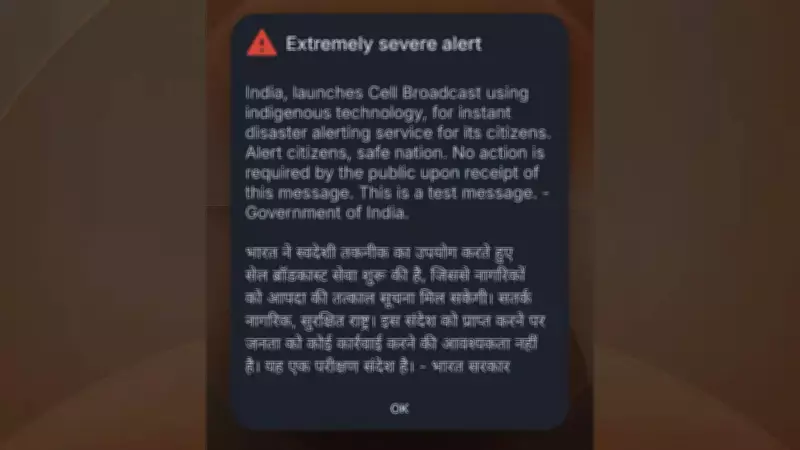
If you received an emergency alert on your phone, there is no need to panic. The notification is part of a nationwide test of an indigenous Cell Broadcasting system designed to ensure quick dissemination of warnings during natural and man-made disasters. The government sent these test messages in English and Hindi on mobile phones; no action is required from recipients during the system validation phase. This article explains what the disaster alert exercise is, why it is done, and how it works.
What is Cell Broadcasting, or Emergency Notification System?
Cell Broadcasting (CB) is a technology that allows the government to send emergency alerts to mobile phones in a specific geographic area. Unlike a standard text message sent to an individual, these alerts are sent in broadcast mode, meaning they are transmitted to all mobile devices within a defined area simultaneously.
Why Emergency Notification System is Important
This system is vital for saving lives during time-critical disasters. It disseminates alerts at a much faster pace than traditional SMS because it needs to deliver warnings in near real-time. It is specifically designed to provide immediate alerts for:

- Natural disasters: Such as tsunamis, earthquakes, and lightning strikes.
- Man-made emergencies: Such as gas leaks or chemical hazards.
- Urgent weather events: Such as cyclones and severe weather warnings.
How the Emergency Notification System Works
The system operates through specialized infrastructure. It uses geo-targeting to send messages only to people in the affected area. For example, if there is an earthquake in the Gujarat region, the emergency alert will be sent to every mobile phone connected to the network towers (Base Stations) in that specific location at once. The National Disaster Management Authority (NDMA) uses an Integrated Alert System called SACHET. This platform follows international standards (Common Alerting Protocol) to ensure alerts are delivered reliably across different mobile networks.
Who Created the Emergency Notification System?
The system has been developed and implemented indigenously within India. The Centre for Development of Telematics (C-DOT), the premier R&D center of the Department of Telecommunications, created the technology. The project is a joint effort between the Department of Telecommunications (DoT) and the National Disaster Management Authority (NDMA).
Availability in Terms of States and Languages
The system is designed for massive, nationwide reach. It is already operational across all 36 states and Union Territories of India. To ensure everyone understands the warnings, alerts are issued in more than 19 Indian languages, including English and Hindi. According to data from the Ministry of Communications, the system has been extensively utilized by disaster management authorities, enabling the dissemination of over 134 billion SMS alerts to date, in more than 19 Indian languages during natural disasters, weather warnings, and cyclonic events.
Content of the Test Message
The test message reads: "This is a TEST Cell Broadcast message sent by the National Disaster Management Authority in coordination with the Department of Telecommunications (DoT), Government of India, as part of testing the Cell Broadcast solution for disseminating alerts. During the testing of the Cell Broadcast solution, you may receive this message multiple times on your mobile handset. Please ignore these message(s); no action is required at your end." Once received, the alert is also read aloud.