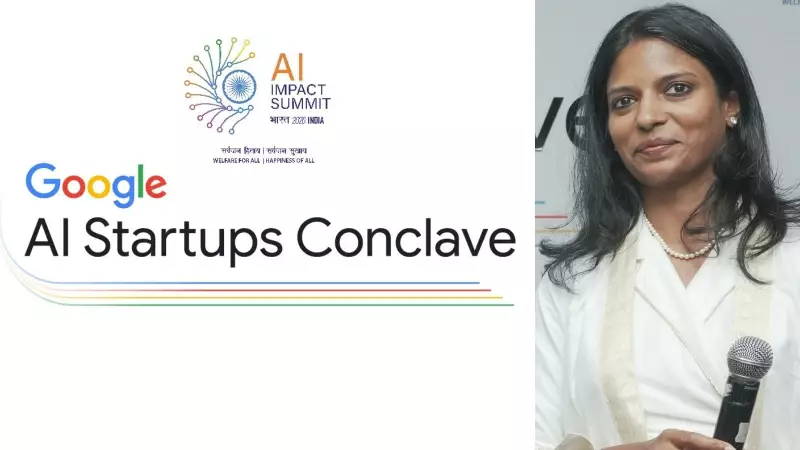
Google executive Seema Rao made a bold prediction about India's startup future. She stated that artificial intelligence companies will dominate the next wave of unicorns emerging from the country.
AI Unicorns Poised for Dominance
Seema Rao, who serves as Managing Director for Top Partners India and Corporate Development at Google, shared her insights at the AI Startups Conclave in Delhi. "We have 120 to 150 tech startup unicorns in India today," Rao explained. "Easily, in the next three to five years, over half of new unicorns will be AI unicorns coming out of India. That's the opportunity we see."
The conclave took place on Thursday, January 15, 2026. This gathering of startup executives from across India served as a pre-summit event for the upcoming global AI Impact Summit. The summit represents a partnership between Startup India and the India AI mission.

Generative AI Changes Everything
Rao highlighted how generative AI technologies create a fundamental shift from previous tech cycles. "What's different is that with generative AI technologies, you can suddenly leapfrog the product build phase," she noted. "You can get to quick prototyping, testing, and iteration with products in the market much faster."
She emphasized that traditional barriers have collapsed. "With generative AI, coding is no longer a barrier, ideation is no longer a barrier," Rao continued. "The whole product development phase has been compressed."
Indian startups are already leveraging these advantages. Rao pointed to language technology as a prime example. "The minute generative AI technologies came, the first wave of startups we saw were solving for this with lip sync technologies," she described. "Using one marketing campaign and instantly converting it into 20 local language campaigns with perfect sync and dialects."
Overcoming Scaling Challenges
While innovation accelerates, Rao identified key challenges for AI startups seeking market adoption. "There are two things," she outlined. "First, when you're building in a new category, trust is the hardest currency to earn."
She stressed the importance of building trustworthy systems from the beginning. "Your models and applications need to work in a way where data governance, data sovereignty, security, and privacy are all taken care of," Rao emphasized.
The second challenge involves market access. "The real challenge then becomes access," she explained. "You've got access to best-in-class technologies and world-class talent. You're able to get to products very quickly. But how do you take it to global markets?"
Supportive Ecosystem and Policy Environment
Rao expressed strong optimism about India's AI future. "I'm super optimistic," she declared. "Having been in the startup ecosystem for over 10 years and seen it from very close quarters, every time someone has tried to write off a certain segment or hype cycle, we've always come back and bounced with more vigour and impact."
She praised India's evolving regulatory approach. "We're seeing a very supportive regulatory environment for startups," Rao observed. "As soon as these technologies became available, India AI Mission went on a mission themselves to make capacity and infrastructure available to Indian startups."
Government support appears strong at multiple levels. "From various government interactions at the highest levels, everybody wants to see India's AI ecosystem flourish, thrive, and reach global scale," she added.
Looking Ahead to Global Impact
The upcoming Global AI Impact Summit represents a significant opportunity for India. Rao expressed enthusiasm about this international gathering. "It's a great opportunity for India to be hosting the AI Impact Summit," she said. "The journey with AI has moved from the 'wow' moment to 'how'. How does it actually translate? That's why it's about impact, outcomes, and deliverables."

Google plans to play an active role in the summit. "Google is very keen and excited to partner with the government on the AI Impact Summit," Rao confirmed. "It's an opportunity for us to show the world what India can do with AI technologies, how our startups are innovating, and how we're coming together as an ecosystem to drive this next wave of adoption."
India stands at a critical juncture in its AI development. Companies are transitioning from building technology to scaling it for real-world impact. The startup ecosystem demonstrates remarkable energy and momentum as the nation prepares for its global AI showcase.